 TM
TM
Collaboration and long-term planning are key to securing agriculture’s future
For California tree nut growers, planting a new orchard is a long-term commitment measured by decades. But as groundwater regulations tighten and water supplies become less predictable, making long-term decisions has become increasingly difficult.
Unlike annual crops, tree nut orchards can’t simply be rotated out if water becomes scarce. Planting, irrigation and infrastructure decisions must be planned today without knowing exactly what water supplies will look like 10, 20 or even 30 years from now.
That need for greater water certainty was a recurring theme during the San Joaquin Valley Water Resilience Summit in Fresno, where growers, water agencies, researchers and state officials discussed strategies for improving long-term water reliability throughout California’s agricultural regions.
“The challenge for growers is planning decades into the future without knowing what their water supply will look like,” said Fresno County grower Daniel Hartwig. “When you’re planting permanent crops, you need confidence that water will be available throughout the life of that orchard.”
Beyond SGMA
While implementation of the Sustainable Groundwater Management Act (SGMA) continues across California, water leaders said the conversation is increasingly shifting beyond simply reducing groundwater pumping and toward developing additional water supplies and improving existing infrastructure.
Geoff Vanden Heuvel, vice chair of the Water Blueprint for the San Joaquin Valley, said regional organizations have spent the past two years developing a unified strategy that identifies where water shortages exist, opportunities to improve local supplies and investments needed to better manage available water.
Rather than treating water challenges as individual regional problems, the effort looks across the entire San Joaquin Valley to identify practical solutions that could improve long-term reliability.
State officials are also taking a broader view.
Joel Metzger, deputy director of statewide water resources planning and enterprise project management for the California Department of Water Resources, said recent legislation directs the department to modernize California’s Water Plan with a greater focus on future water needs, including identifying 9 million acre-feet of additional water supply, conservation or storage capacity by 2040.
“The recognition that California needs additional water supplies represents an important shift,” Metzger said. “Our goal is to develop a future-focused plan that helps communities prepare for changing conditions.”
Finding Practical Solutions
Speakers made it clear that increasing water reliability will require more than one single project or policy.
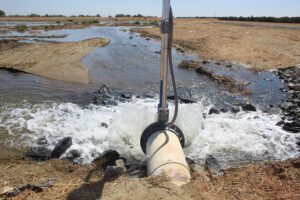
Improving groundwater recharge, expanding surface water storage, modernizing infrastructure and operating existing reservoirs more efficiently are all expected to play a role. At the same time, collaboration between growers, water districts, groundwater sustainability agencies and state officials will also be crucial.
Laura Ramos, director of the California Water Institute at Fresno State, said California can no longer rely on historical snowpack and runoff patterns to meet future demands.
“We’re already short on water,” Ramos said. “That means we have to think differently about new supplies, new projects and new policies that help create a resilient water future.”
She encouraged growers to stay engaged as the California Water Plan is updated over the next several years, noting the process will include public meetings throughout the state and opportunities for agricultural stakeholders to provide input.
A Shared Goal
Although discussions around SGMA can sometimes create tension between growers and water managers, several speakers stressed that both groups ultimately want the same outcome, one that provides productive farms, healthy communities and sustainable water supplies.
They said continued collaboration will be necessary to identify practical solutions that protect agriculture while meeting California’s long-term groundwater sustainability goals.
For tree nut growers making investments expected to last decades, those conversations might prove just as important as the policies that eventually emerge.
Hartwig wants to see those discussions lead to meaningful action.
“I hope that it means that we’re listening, and that others are listening, the state is listening, the federal is listening, the local government is listening,” he said. “We’re hoping that they can get there to find solutions, because we all want a vibrant agriculture.”