 TM
September is more than the end of harvest; it’s the moment to read the orchard, correct what can still be corrected and protect the carbohydrates and root-zone health that will support next season
By September, the bins, grade sheets and orchard floor are beginning to tell the truth about the season. Nut size reflects irrigation performance. Rejects point toward pest pressure. Weak blocks expose nutritional gaps, soil limitations or herbicide mistakes. The orchard is producing an operating report, but growers have to slow down long enough to read it.
I have spent 45 years walking California fields as an independent PCA, CCA and certified professional agronomist. My message to almond, pistachio and walnut growers this fall is straightforward: harvest is not the finish line. The weeks immediately after harvest can shape how well your trees enter dormancy and how strongly they begin next season.
Rehydrate First, Then Make Targeted Decisions
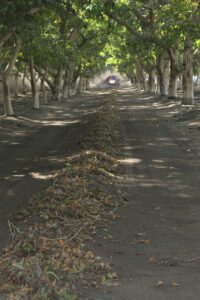
Harvest often puts trees under water stress, particularly where nuts must remain on the orchard floor and irrigation cannot resume immediately. My first priority is to rehydrate trees as soon as harvest operations allow. If you can sweep the nuts away from the berm and continue running drip irrigation, you may have more flexibility. Where that is not possible, the postharvest irrigation window becomes even more important.
This season’s difficult mite pressure adds another layer. Some almond orchards experienced substantial defoliation. Once irrigation resumes, stressed trees may try to push new leaves. That regrowth uses carbohydrates the tree would otherwise store for next season. Because the 2026 season moved earlier than normal, some orchards may have enough time to rebuild part of those reserves, but growers should not assume recovery will happen on its own.
The right nutrition program depends on what the orchard actually needs. I recommend reviewing tissue analyses before making blanket applications. If nitrogen or boron levels are already above the recommended range, you may be able to reduce or skip a postharvest application. If levels are low, delaying correction can leave the orchard trying to catch up next spring.
Boron deserves particular care. A modest application may be useful in many permanent crops, but excessive boron can cause damage, including in pistachios. The practical lesson is to let tissue results, crop history and orchard conditions drive the rate rather than following a routine program simply because it was used last year.
Use Harvest Results to Diagnose Weak Blocks
Where yields, nut size or quality vary between blocks, do not put all the blame on the weather. I advise growers and consultants to compare tissue analyses, irrigation performance, soil type and herbicide programs. In sandy soils, an herbicide used at an inappropriate rate can reduce tree growth and yield. Irrigation records can also reveal a gap between how much water you believed you applied and how much water the trees actually received.
I recently evaluated an eight-year-old almond orchard whose trees looked closer to third leaf. The grower believed the block was being irrigated well, but when we calculated the weekly applied water, we found the orchard was receiving only about two days’ worth of demand. The lesson is not simply to irrigate more. Calculate the applied water, compare it with crop demand and confirm the answer against what the trees are showing.
Nut size is one of the clearest harvest indicators. Blocks that remained adequately irrigated generally maintained more normal sizing, while blocks that fell behind showed smaller nuts, weaker yields and disappointing turnouts. Those observations should be mapped and carried into the next irrigation plan.
Look Beyond the Processor’s Reject Number
A single reject percentage does not provide enough information to improve next year’s pest program. Growers and their PCAs need to know what caused the damage, whether it was navel orangeworm, plant bug injury or another source. That requires a more specific harvest record.
My team collects samples from the orchard floor behind the harvesters and cracks them out by hand. Because damaged nuts may be blown out during pickup or removed at the huller, our orchard-floor samples can show a higher damage percentage than the processor report. That difference is valuable. A processor may report 2% damage while our field sample reveals 4%, showing that the orchard lost more production than the final grade sheet suggests.
Growers do not have to sample every variety in every block to gain insight. A consistent set of representative samples, accompanied by photos, maps, crack-out notes, yield records and grade sheets, can give the PCA or CCA far better evidence for next season’s recommendations.
Three September Priorities
If I could leave growers with only three September priorities, they would be these. First, restore the orchard’s water status promptly after harvest and verify that applied water matches actual crop demand. Second, use tissue analyses to determine whether nitrogen, boron or other nutrients require attention before dormancy. Third, plan fall potassium applications while soils are still dry enough to support equipment. A concentrated band of dry potassium can be a practical fall strategy in almonds when it fits the block’s needs.
September is also the time to preserve the evidence from harvest. Photograph weak areas. Mark locations of small nuts, poor tree growth, standing water or unusual pest damage. Compare those observations with irrigation, fertility and pesticide records. The goal is not to create paperwork for its own sake. It is to replace assumptions with a block-by-block explanation of what happened.
The most expensive mistake may be treating harvest as the end of the crop year. The trees are still active, the root zone still requires management and the information needed to improve next season is available right now. Growers who use September to rehydrate, measure and document will enter dormancy with a clearer plan, and begin next spring with fewer surprises.
Questions Worth Discussing Now
If you are looking at grade sheets, tissue analyses, irrigation records or orchard damage and still cannot explain why one block underperformed another, those questions deserve attention while the evidence is still fresh. Is the problem primarily irrigation, nutrition, pest pressure, soil condition or the interaction among several of them? Which corrections still belong in the postharvest window, and which should become part of next year’s plan?
These are the kinds of questions I work through with growers every day. If you would value an experienced, independent perspective on what your harvest is revealing, I invite you to call me and talk through the block. Bring the field history, tissue results, irrigation information and grade sheets you have. A focused conversation now may help you protect next year’s crop and prevent a correctable issue from becoming a much more expensive problem. Gary Osteen can be reached at gary@osteenag.com or at (661) 333-5551.

Publisher’s Take
The Big Picture: What to do Next
1. Rehydrate quickly after harvest
Restore tree water status as soon as harvest operations allow, and verify applied water against actual crop demand.
2. Let tissue analysis guide fall nutrition
Review nitrogen, boron and other nutrient levels before making routine postharvest applications.
3. Use harvest results to diagnose weak blocks
Nut size, yield and quality differences can point to irrigation, soil, nutrition or herbicide issues that need attention.
4. Dig deeper into reject numbers
Identify the actual source of damage rather than relying only on the processor’s overall reject percentage.
5. Document what the orchard is telling you
Photos, maps, grade sheets, crack-out results and irrigation records can help explain this year’s performance and improve next year’s plan.