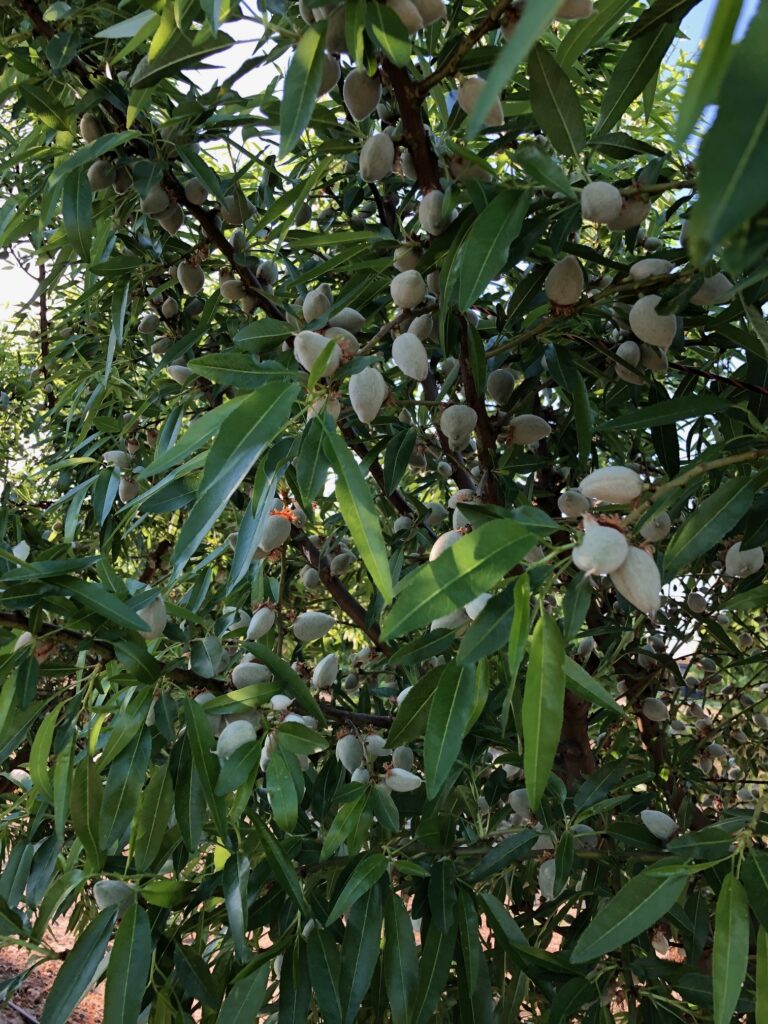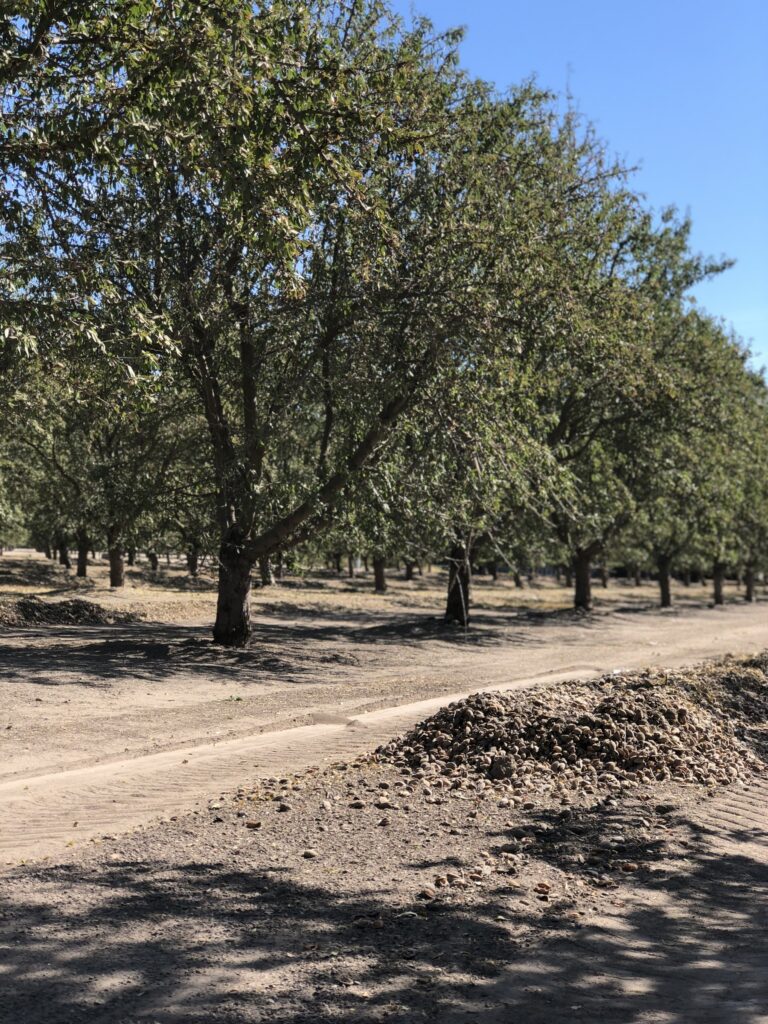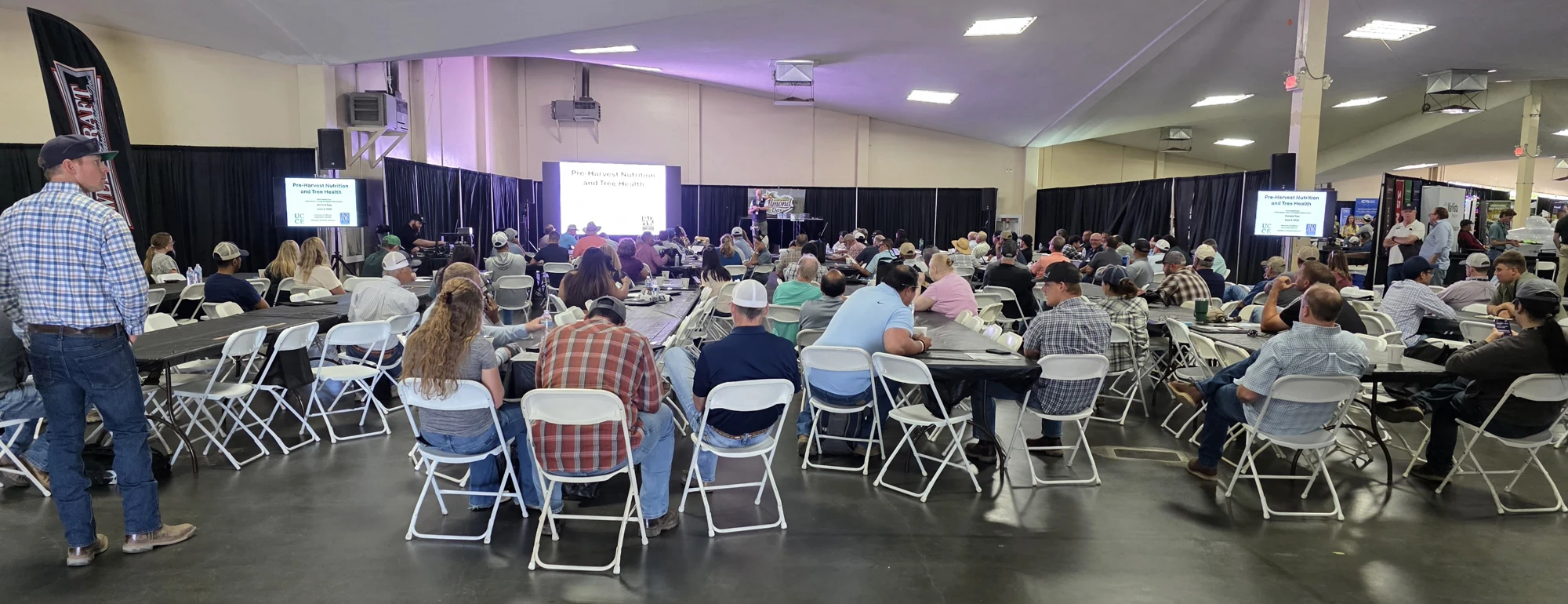
With almond and pistachio harvests winding down and walnut harvest well underway, postharvest tasks and 2027 planning become a bigger part of day-to-day operations.
Get ready for a very good chance for a wet winter. I’m not suggesting anyone “buy a boat” right now, but lining up a good deal on one that meets your needs plus bookmarking weather sites might pay off. Current long-term National Weather Service forecasts for north of Sacramento (weather.gov/sto) are for chances of warmer temperatures and normal rainfall into December with increasing chances of wetter-than-normal rainfall into spring. That forecast will continue to be updated and may change, but so far the numbers keep pointing to a winter rivaling 1982-83 or 1997-98. It might be worth making several sets of plans this fall, including one for a really wet winter.
Water: Current NOAA Climate Prediction Center forecasts for a warmish fall with average rainfall (equal chances) mean continued fall irrigation despite all the talk of a wet winter. Lots of rain later this winter won’t make up for stress on developing buds this fall from insufficient irrigation.
With leaves still on the trees, adequate irrigation is needed to support photosynthesis (water + carbon dioxide + sunlight = sugar + oxygen) to power current plant activities and provide feedstock for winter storage. [Many orchards with widespread leaf drop at harvest put out new leaves in September.] Daily orchard water use will drop through October as days get shorter and cooler, but that water is key to good orchard health. Mild water stress (-10 to -14 bars using the pressure chamber) is OK after harvest according to UC researchers. These targets should be -4 to -6 bars below baseline given expected seasonal high temperatures in the 70s to 80s. See UC ANR publication 8503 on using the pressure chamber in almonds, walnuts, and prunes. Maintaining adequate fall irrigation is key to preparing the orchard for next year.
Should defoliated almonds be irrigated after harvest? It’s a little late for this question, this year. Most growers faced that question in August or September. Still, I think a review of expert opinions is worth the ink. The short answer is yes. Why? Maintaining adequate water availability means good leaf function, which feeds healthy bud development through the fall. Late-summer releafing will cost trees carbohydrates and nitrogen, but the leaves will be active through the fall providing net carbon benefit by the time of natural leaf drop months later. Won’t there be a chance of fall flowering in blocks that defoliated and were then irrigated? Dr. Goldhamer, retired UC Irrigation Specialist, reported that late fall flowering will reduce yield potential for the following year when cool weather in October is followed by a warm November. If October is warm, as forecast, it’s possible that the risk of fall flowering will be limited while adequate irrigation will help support healthy flower buds for next February.
Pest/Orchard Review
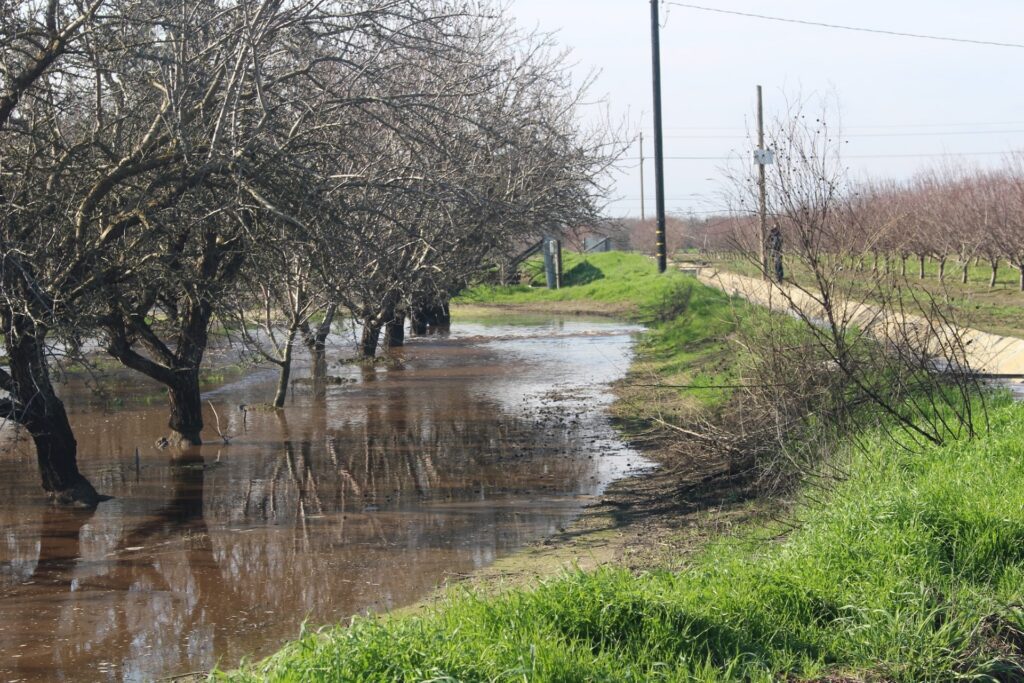
With wet winter/spring weather in the forecast, the risk to orchard health from saturated soils should be on the radar for all growers and PCAs. Extended periods of saturated soils can kill nut trees either by lack of oxygen (anoxia) or promoting Phytophthora crown and root rot infection. Not all orchards are at the same level of risk based on location, rootstock selection and planting strategy.
Effective water management is the key practice in controlling both Phytophthora crown/root rot and anoxia. Planting trees significantly above the orchard floor (8 to 10 inches) on a berm, island, or mound helps keep the crown out of saturated soils, but that is a one-time practice, and the focus, here, is water management in established orchards. [Throwing up a berm in an established orchard that was originally planted “flat” doesn’t raise the crown and exposes the vulnerable scion to disease infection.]
Almond, walnut, and pistachio rootstocks differ in Phytophthora vulnerability. Since commercial walnut and pistachio rootstock options are limited, the relative ranking of Phytophthora tolerance is simple. For pistachio, Platinum is the most Phytophthora-tolerant rootstock compared with PG1 and clonal UCB-1. For walnut, RX1 shows moderate to high resistance to two damaging Phytophthora species. For almond, where more than a dozen rootstocks are commercially available, check out the Almond Rootstock Comparison Chart developed by UC researchers with Almond Board of California support. It can be downloaded as a free PDF (fruitsandnuts.ucdavis.edu/almond-rootstock-comparison-chart) or check with your local UCCE office to see if they have a hard copy. We have plenty in the UCCE Colusa office.
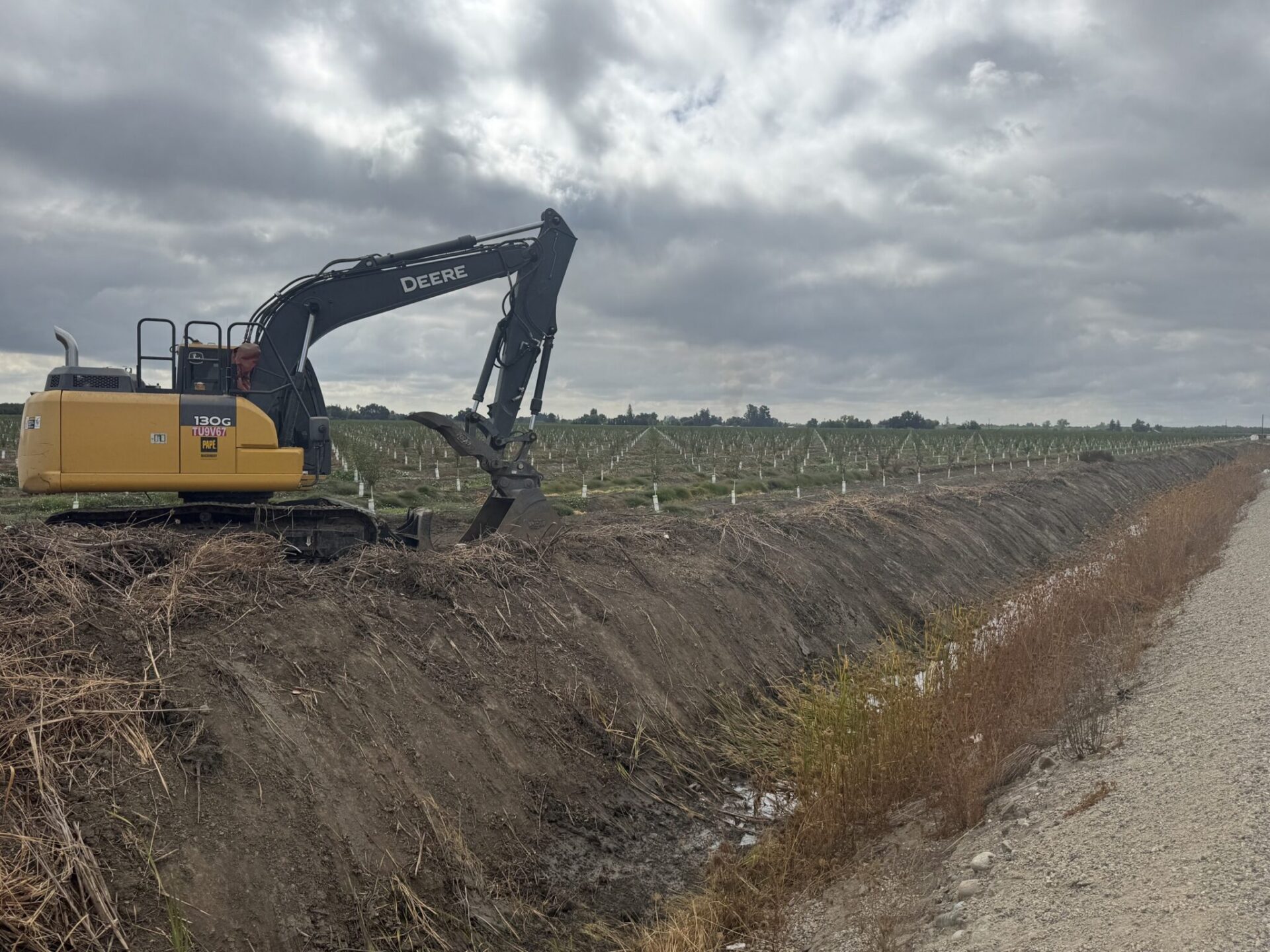
Getting water out of the orchard and keeping it out will reduce the risk of tree loss. Keeping downstream ditches open and free-flowing keeps runoff from backing up into the orchard. Conversations now between neighbors on managing ditch flow can help keep runoff water moving to the benefit of all. I’ve already seen track hoes clearing sediment out of roadside ditches to maintain water movement away from orchards if heavy rain occurs. If an orchard doesn’t have a natural drain to outside ditches, consider options to remove excess water before heavy rains hit.
What can be done to protect trees from Phytophthora and anoxia? Unfortunately, there is no treatment for anoxia once the orchard is in the ground. Avoiding saturated soils is the only effective strategy. There are, however, effective treatments for Phytophthora root/crown rot management. A strategy of two applications, a fall (early October) and spring (late February/early March) treatment is recommended by Dr. Jim Adaskaveg, plant pathology professor at UC Riverside. Rotating between effective chemistries helps keep them working (helping manage pest resistance to the fungicide). Consult with your PCA regarding the need for treatment of individual orchards based on location, rootstock, and bearing status.
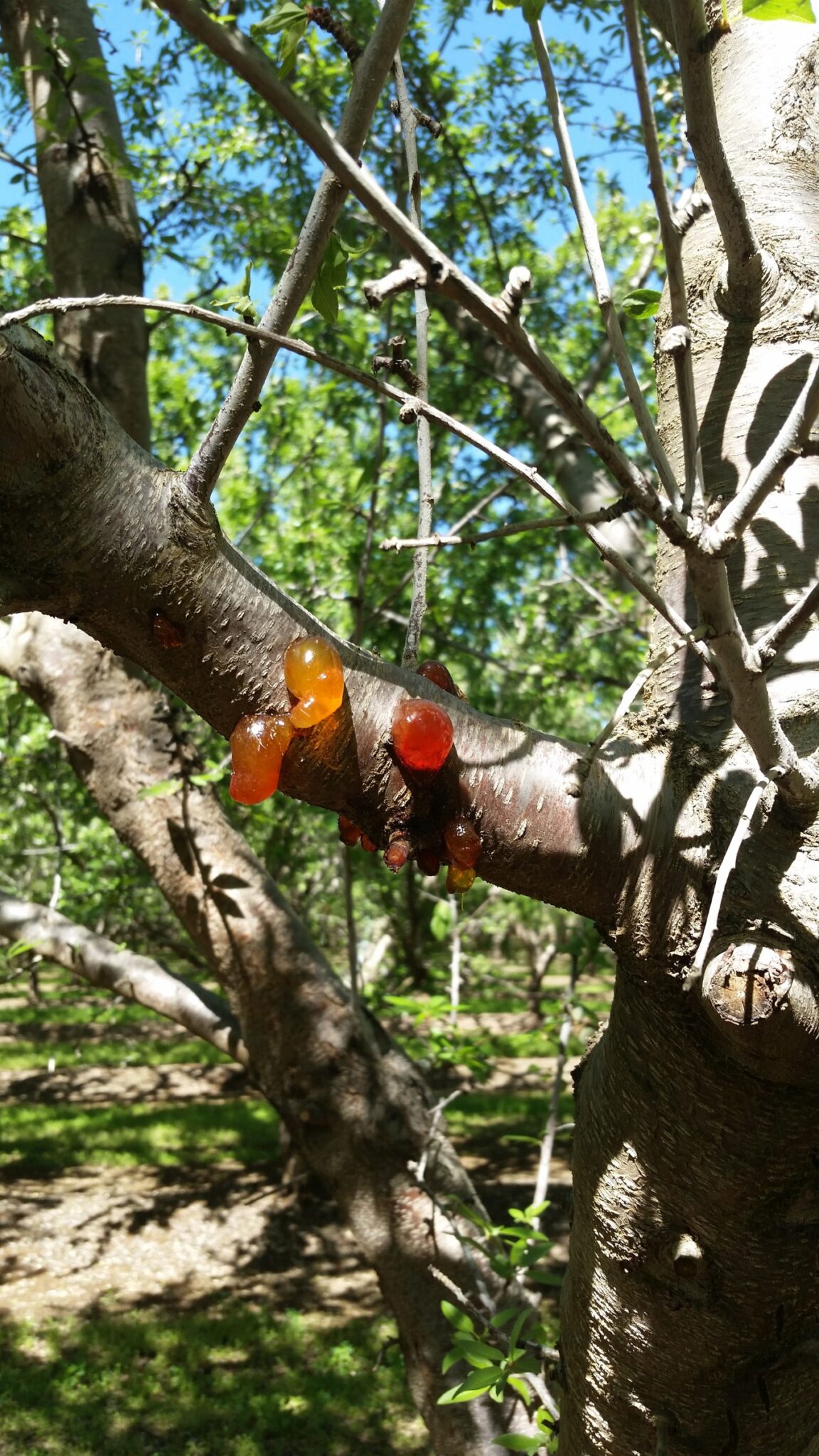
Aerial Phytophthora (also known as Phytophthora pruning wound canker caused by Phytophthora syringae) is also a threat to almonds in wet winters. Although generally not a risk to entire trees, this disease can cause branch dieback, producing large, red gumballs at pruning wounds and/or at the base of small shoots. The pathogen dies out with warm spring weather. Applications of systemic materials such as phosphite (foliar or soil-applied) or mefenoxam (Ridomil Gold●) can deliver effective control. Recommended timing is early in the growing season (mid-March) as the almond canopy usually fills out by that time allowing both good surface area for foliar products (phosphites) and translocation of soil-applied materials (phosphites and mefenoxam).
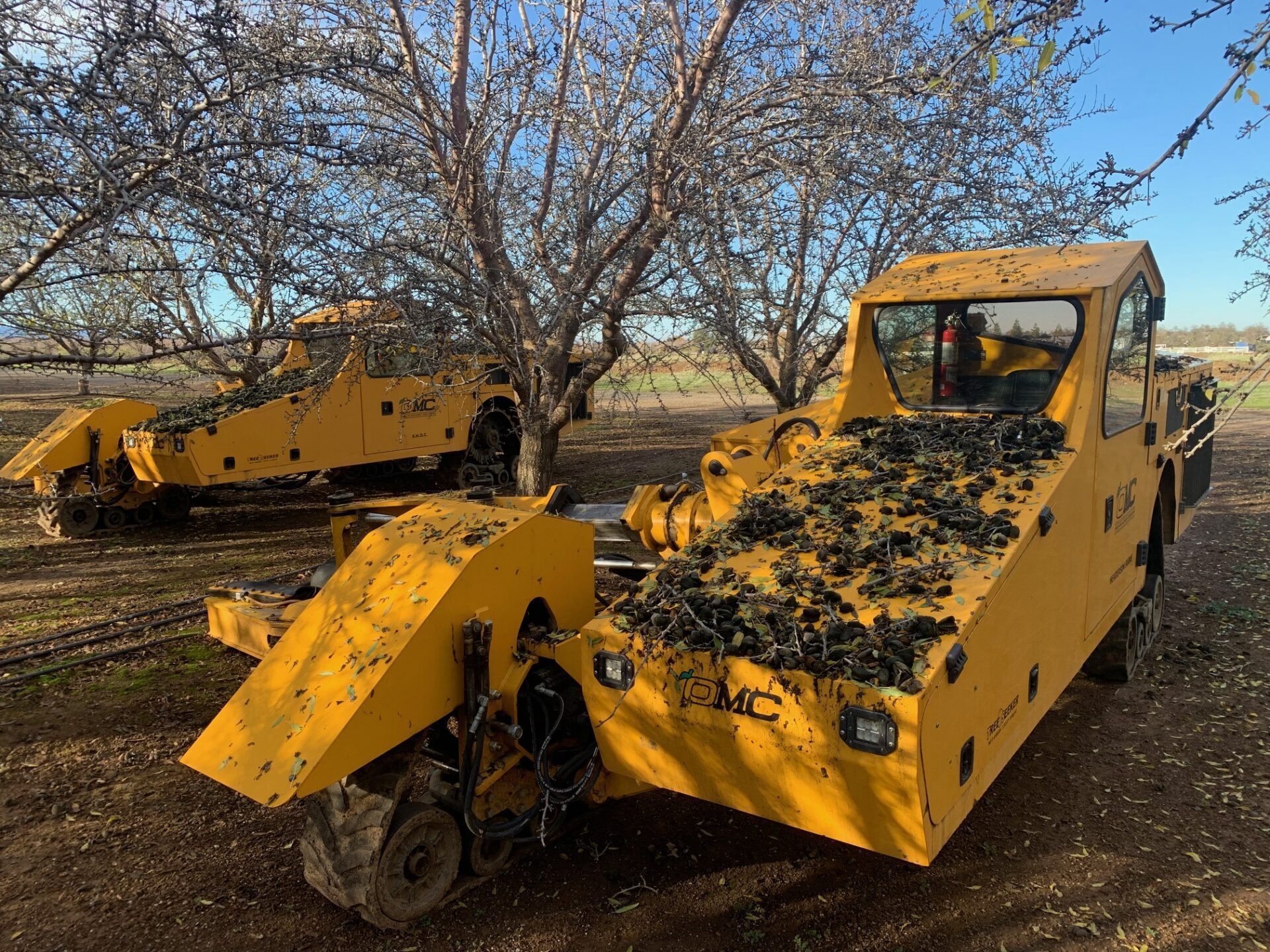
Wet weather can limit orchard access for equipment needed for mummy shaking and herbicide spraying. Earlier mummy shaking may be needed to get the job done and help control navel orangeworm (NOW) and Carpophilus beetle plus bacterial spot. Don’t count on the winter weather to do the job for you. Weed control in a wet winter means dealing with “good” weed growing conditions for months. Consult with your PCA about preemergent materials and application timing to stay on top of weeds this winter and into the spring. Spraying preemergent herbicides provides longer-lasting control than with postemergent (burndown) materials. Nobody should be trying to control growing weeds with postemergent herbicides next spring while catching up on a backlog of orchard tasks coming out of a wet winter. That’s a tall order: expensive, difficult, and often ultimately ineffective. Staying ahead of weeds is particularly important in young orchards as voles and gophers thrive when hidden from predators. Even if weeds are eventually killed, the dead vegetation still hides rodents until a hand crew removes it.
Rust was a problem this year in some Sacramento Valley orchards. Rust inoculum overwinters on lingering leaves, so a side benefit of a high rate of zinc sulfate foliar fertilization (20 pounds of material per acre after the first rain, when orchard humidity increases) is defoliation which reduces disease inoculum going into next spring.
How clean was the harvest? Scout the orchard for shaker damage and trunk disease.
Nutrition
Where harvest hull boron levels are below 125 ppm B, a fall spray (equivalent to 2 pounds Solubor●/acre) is recommended. If hull B levels are below 80 ppm, adding in-season (spring and summer) B fertilization to the fall spray should be considered. Zinc sulfate can be tank mixed with boron, but when using polyborate (Solubor●, Borisol●, etc.) reduce the tank water pH to 5 with an organic (acetic, citric, etc.) acid to keep all the boron and zinc in solution. Adding some urea (5 to 10 pounds/acre) to the boron/zinc tank can help with boron uptake and provide a little extra N heading into the winter.
A fall potassium (K) application of dry, coarse fertilizer on the soil surface is an established practice in many tree crops. Winter rains dissolve the material (SOP, MOP) and move it into the soil, getting K in the ground ahead of next year, helping spread costs and saving time next year. However, on light-textured soils (for example, CEC<10 meq/100 gm soil), some K can be leached down and perhaps out of the root zone. The more rainfall, the greater the risk of K leaching on such light soils. In-season alternatives to fall K fertilizer are spring K banding/directed broadcasting or soluble K fertilizer injection (ultra-fine SOP, KTS, pot carb, etc.). Both in-season methods effectively get K into the root zone and help maintain leaf K through the season. When banding fertilizer K in drip-irrigated orchards, place the K as close to the drip hose as possible to allow roots to access the K next season.
Soil Cover
Cover crops or mulch help slow rainwater runoff, reduce erosion, and improve water infiltration. Cover crops should be planted by the end of October for best results. Almond shell or shell/hull mixes applied as a mulch provide potassium to the soil if water (rain or irrigation) wets the material and improves water infiltration. Higher rates of compost can help with infiltration. Shells and compost can interfere with good soil contact for preemergent herbicide, so put down the herbicide before the organic matter (OM) goes into the spray strip or keep the OM out of the tree row and in the tractor aisle as much as possible. Shells spread in the tree row does provide “free” K and improve water efficiency but can stay relatively intact and may end up in the windrows the next harvest.
Best wishes to all for a less busy fall and continued solid nut markets.
General Nut Orchard Resources
Loads of great articles and info (weekly ET, nutrition, meetings, pictures, etc.). This is a site developed and maintained by UCCE Orchard Advisors in the Sacramento Valley: sacvalleyorchards.com
Trunk & Soil Diseases in Almond: sacvalleyorchards.com/almonds/trunk-soil-diseases/
Click on the crop of interest. The pistachio Phytophthora page has recently been updated: ipm.ucanr.edu/agriculture
Originally published in the October / November 2026 issue of West Coast Nut, beginning on page 52.
From the Orchard
to Your Next Good Decision.