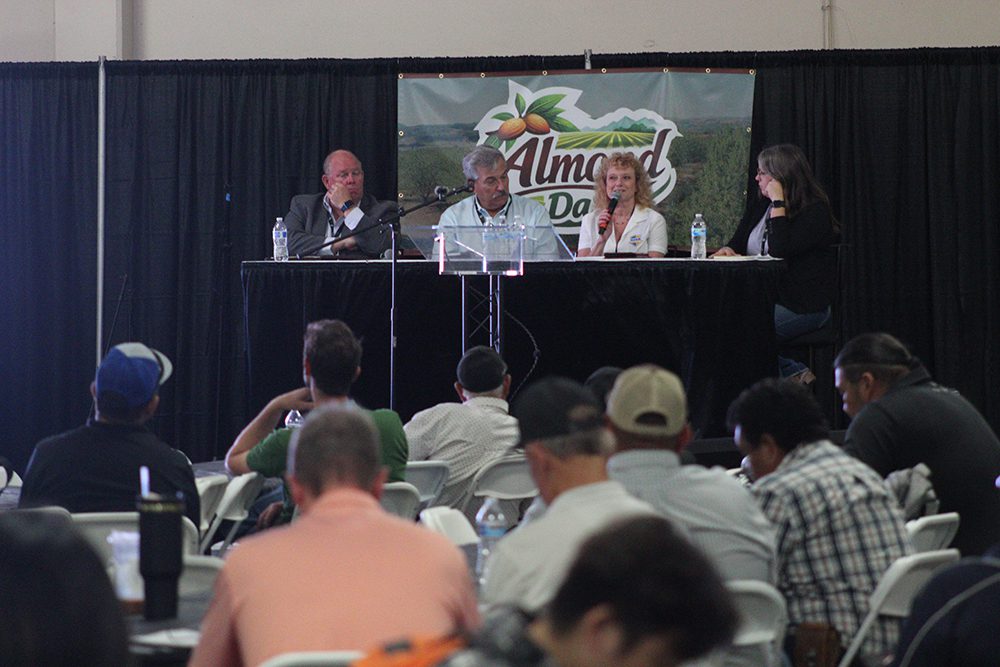
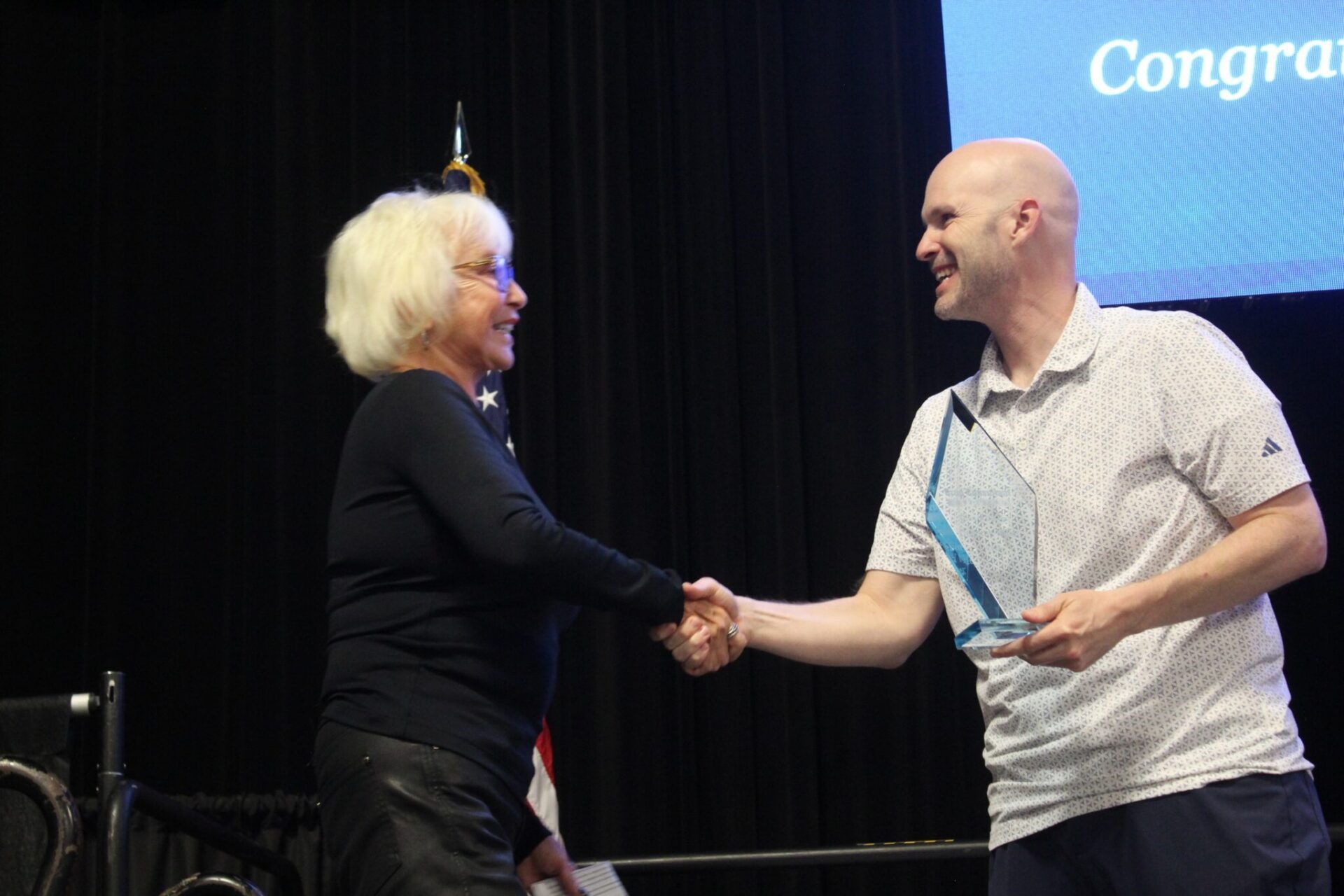
The Crop Consultant Conference recognized four California agriculture professionals with its inaugural awards during the 2026 conference in Visalia.
Deborah Miller, founder of Deerpoint Group, received the Titan Award; Gary Osteen was named PCA of the Year; Rich Kreps was named CCA of the Year; and Dr. Elizabeth Fichtner was named Researcher of the Year.
The four recipients represent different areas of California agriculture, from crop consulting and plant nutrition to research and agricultural water management. Their work has also touched many of the issues facing California tree nut growers, including pest management, water, nutrition, orchard management and emerging disease threats.
Titan Award: Deborah Miller
For Deborah Miller, some of the biggest challenges facing California agriculture have also represented its greatest opportunities for innovation.
That outlook helped shape more than three decades of leadership at Deerpoint Group, the company Miller founded in 1993 to bring new chemistry, technology and service concepts to agricultural water management.
Miller’s career began in science. She earned a bachelor’s degree in biology and chemistry from Case Western Reserve University in 1974, graduating with honors, and later pursued graduate business studies at the University of Chicago while working full time.
After early positions in laboratory and research chemistry, Miller spent approximately 17 years with Nalco Chemical Company, advancing through scientific, manufacturing, marketing and executive management roles. Agricultural responsibilities first brought her to California in 1980, beginning what would become a career closely tied to the state’s growers.
She eventually left Nalco to establish Deerpoint Group. What began in agricultural water management expanded into irrigation-water treatment, fertigation, plant nutrition, specialized fertilizer chemistry, analytical services and automation.
Asked what she is most proud of from more than three decades building the company, Miller pointed to the innovations Deerpoint brought to agriculture.
“Because it was a paradigm shift for both water treatment and fertigation, and encompassed processes and products,” she said.
That innovation was often driven by constraints.
Limited water and poor water quality became opportunities to find new solutions. High fertilizer prices and limited seasonal availability created another reason to innovate. Declining grower profitability required the same response, all to help the grower increase profitability.
“Leadership became the force to always see these challenges as opportunities,” Miller said, “find a solution and drive the company’s focus to the goal.”
Deerpoint ultimately grew to serve agricultural customers throughout California and, at its peak under the leadership of Miller and her husband and business partner, John,, employed over 120 people. In 2025, a majority interest in the company was acquired by Edgewater Capital Partners as part of a succession and growth strategy.
Miller also watched the role of women in agriculture evolve throughout her career. She’s seen more women move into field positions, she said, although fewer have reached executive levels of authority.
Her own approach, however, was never centered on succeeding specifically as a woman.
“I always strove to be the best at what I did, worked the hardest, and let no adversity stand in my way,” Miller said.
Her advice to the next generation follows the same philosophy.
“Ignore the stereotypes society wants to place on you. Don’t expect or want any concessions for your gender or race, just be the best and stay focused on your goals.”
As Miller moves into the next chapter of her career, she knows Deerpoint will continue growing into a national and global leader in the innovations she and John developed. As for her own legacy, she hopes to be remembered for her dedication to the company and for the honesty and integrity that helped it grow.
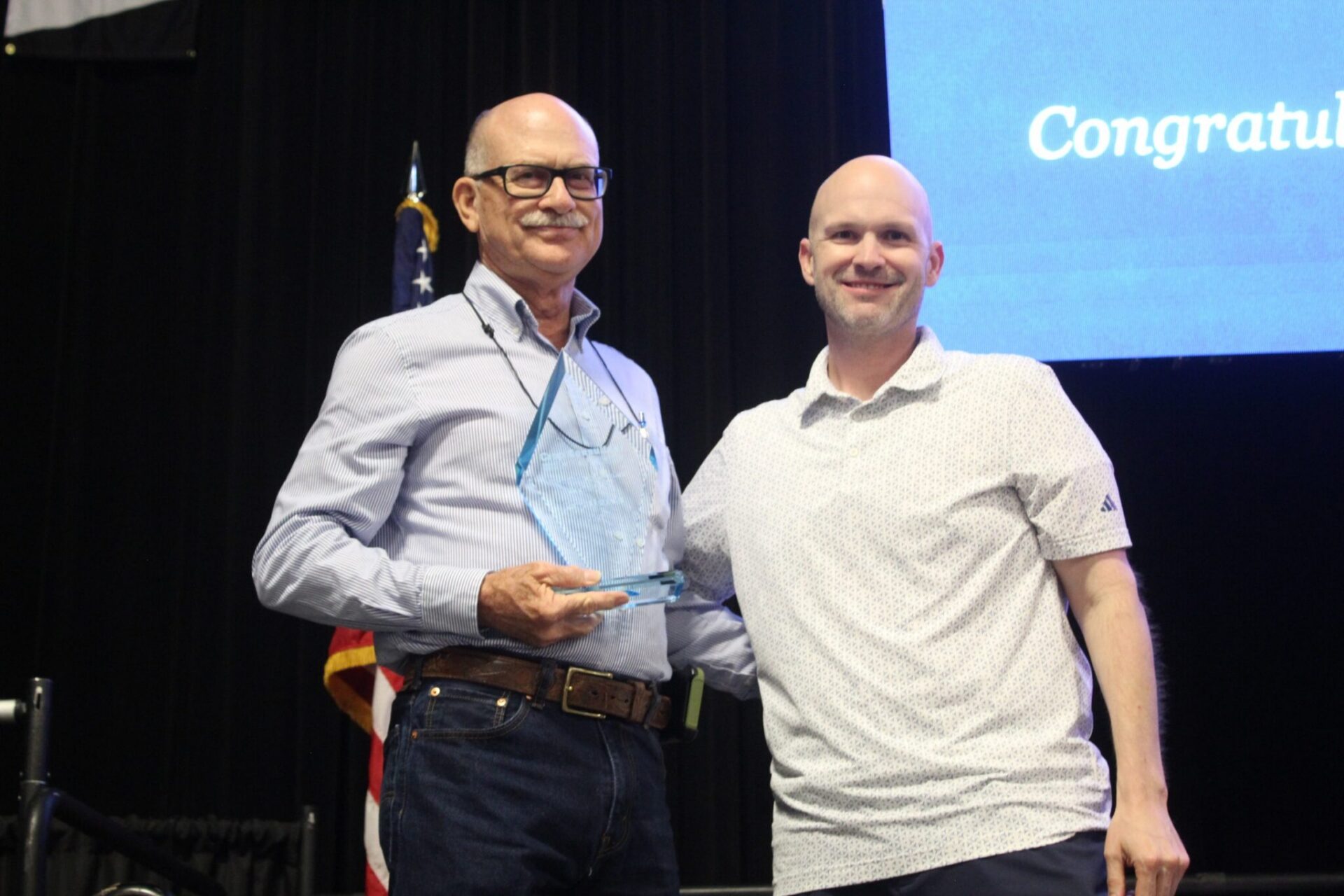
PCA of the Year: Gary Osteen
After more than 45 years as a PCA, Gary Osteen still considers field scouting one of the most important parts of the job.
“A good PCA first off has to be a good field scout,” Osteen said. “And if you don’t do that, you’re not doing your job right.”
Osteen earned his bachelor’s degree in plant science agronomy with an emphasis in plant protection from Fresno State before continuing his education in plant protection and pest management at UC Davis. He started his career working in crops including cotton, alfalfa and grains. As cropping patterns in the San Joaquin Valley changed, much of his work shifted into permanent crops, particularly almonds and pistachios.
Today, Osteen works with more than 45 growers across the San Joaquin Valley. Some of those relationships have lasted more than 35 years, including one approaching 40.
“That has been very gratifying,” he said.
Osteen has also watched pest pressure change over the course of his career. In almonds, pests such as leaffooted plant bug and green stink bug have become more prominent, while mealybugs have become a greater concern in pistachios and grapes.
Changes in crops, pest complexes and available products mean PCAs have to continue learning, he said. Osteen regularly follows university research and changes in pesticides, resistance, monitoring and pest biology.
For younger PCAs, however, he said the foundation still starts with knowing how to scout a field.
“Number one, you have got to learn how to check a field, determine whether it’s got a problem, what that problem is, what the population dynamics are, what’s the best products for you to use, and that’s constantly changing,” he said.
Osteen has also worked extensively in forensic agronomy on cases involving pesticide drift, crop losses and PCA standard of care.
At 70, he has no immediate plans to retire. And while receiving the PCA of the Year award after more than four decades in the industry is gratifying, Osteen said much of his satisfaction still comes from helping growers produce quality crops, maintain yields and control costs.
“I love my job,” Osteen said. “That’s why I haven’t retired.”
CCA of the Year: Rich Kreps
Rich Kreps took a bit of an unconventional route into plant nutrition.
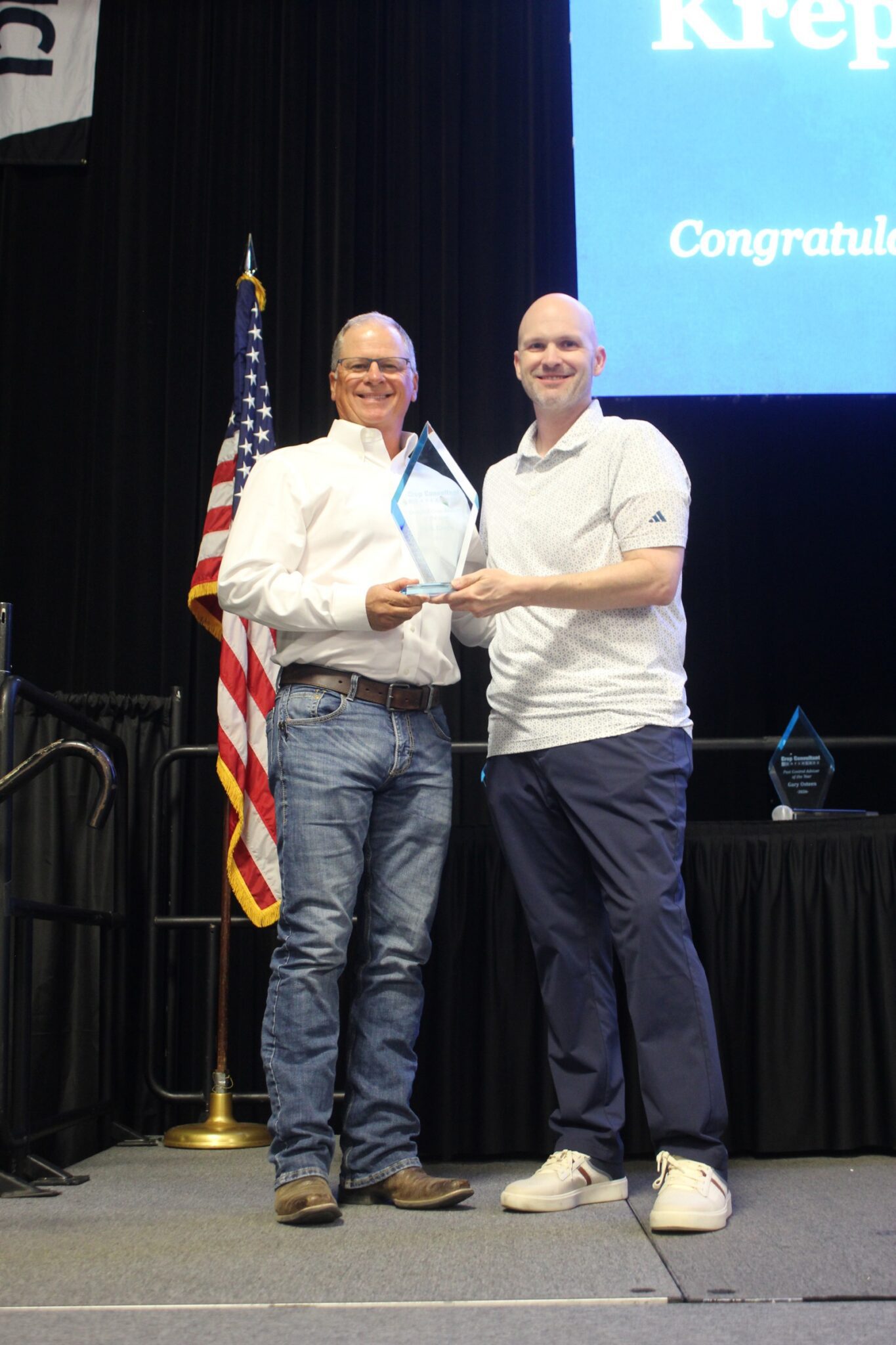
The Ultra Gro president initially studied pre-med and chemistry at UC Santa Barbara before moving into human nutrition, entrepreneurship and business. His career included restaurant ownership, personal training and sports nutrition counseling before he moved from human nutrition into plant nutrition about 15 years ago. He just recently completed his MBA in 2026.
Kreps said one of his proudest accomplishments has been helping build Ultra Gro around healthy soils and regenerative and sustainable farming practices before those terms became as common in agriculture as they are today.
“More effectively combining nutrients with complexors and actively brewed beneficial biology has been a fun journey to stay at the forefront of with Ultra Gro,” he said.
Pistachio nutrition is one of Kreps’ current areas of focus. He believes more research is needed on nutrient synchronization, particularly when individual nutrients are needed to match tree demand and physiological patterns. Better monitoring and artificial intelligence could help answer some of those questions, he said.
That work also connects to one of Kreps’ longtime influences, retired UCCE farm advisor Bob Beede.
“I told Bob Beede 15 years ago that I would be the pistachio nutrient guy in 10 years for this industry,” Kreps said.
Beede joked that he would be retired by then. Kreps pointed out that Beede continues to work with growers and contribute to the industry today, something Kreps hopes to do throughout his own career.
Kreps expects AI, automation, soil health and more efficient irrigation management to play larger roles in agriculture. He also believes the industry has to remain willing to question established practices.
“We have to continually question the efficacy of old practices and embrace new technology,” he said.
His advice to the next generation is simple.
“Never stop learning,” he said.
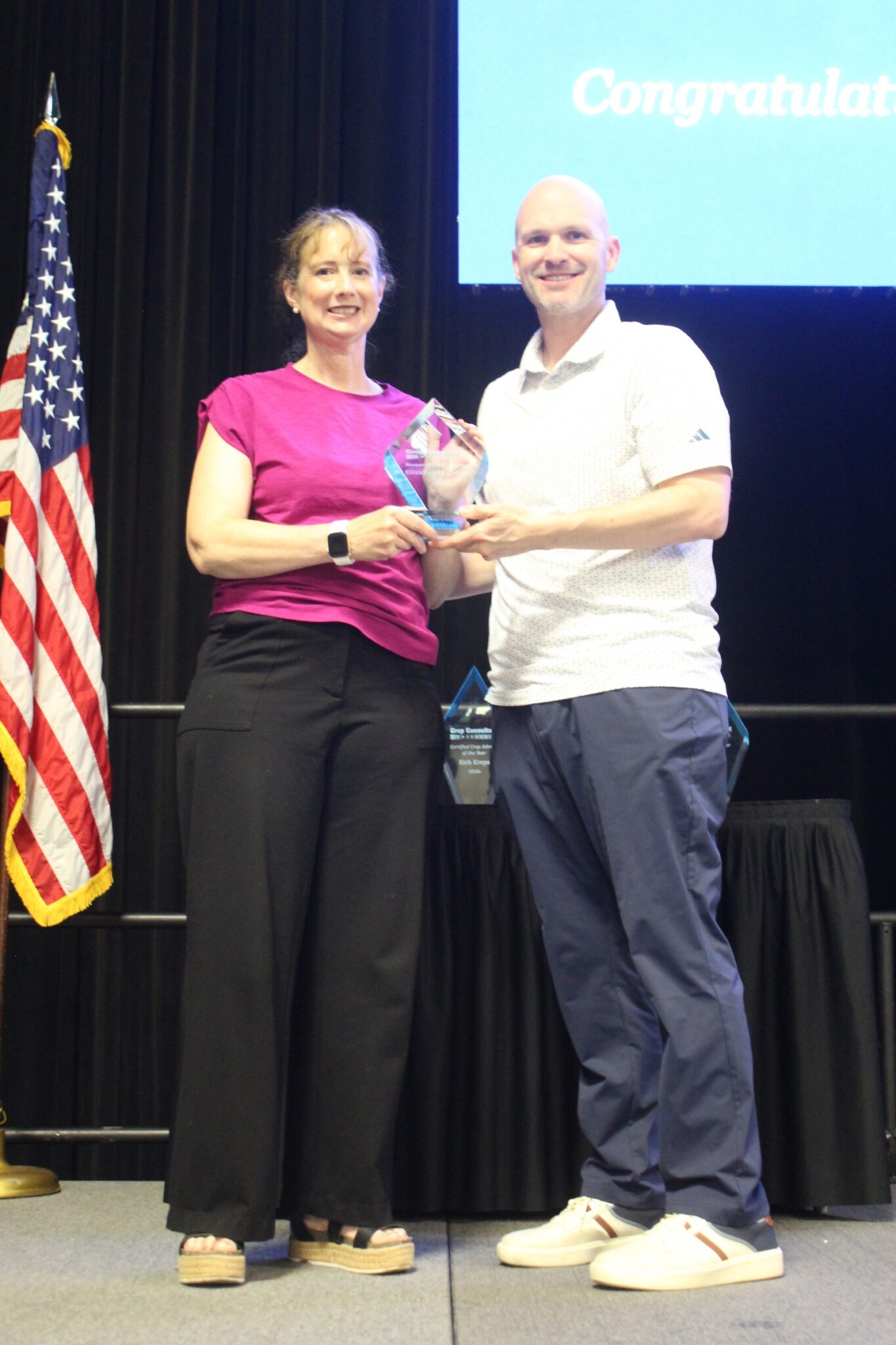
Researcher of the Year: Dr. Elizabeth Fichtner
Dr. Elizabeth Fichtner has spent much of her career working on research that benefits California orchards.
Fichtner has served as a UCCE Tulare County orchard systems advisor since 2009. Her research and extension program focuses on the productivity and economic sustainability of nut crops, olives and prunes, with work in plant pathology, orchard management and horticulture.
One of her current research areas is a growing concern for almond growers in the southern San Joaquin Valley: Ganoderma adspersum, a fungal pathogen associated with internal wood decay and tree mortality.
Affected trees can appear healthy and continue setting a crop before snapping at the base because of internal decay. There are currently no palliative or curative treatments, and Fichtner said the disease could eventually reduce the economic lifespan of affected orchards as it becomes established in the region.
Fichtner’s research has also included work outside of California. During her postdoctoral research in the United Kingdom, she studied forest diseases and found invasive pathogens could survive and reproduce in asymptomatic root infections, identifying a potential pathway for pathogens to move through international nursery plant trade.
In California, she has worked with researchers including Dr. Bruce Lampinen on alternative pruning strategies in walnuts and pistachios aimed at maintaining production while reducing management costs. Her work has also included walnut rootstocks, pistachio and almond disease issues and other questions related to orchard productivity.
Fichtner is also incorporating new technology into her research. Two of her current projects include weather-based risk models for olive fruit fly and an app to evaluate fruit-size distribution in table olive samples.
When asked what she hopes will remain from her career, Fichtner pointed to one of the more traditional parts of extension work.
“My favorite part of my job is the composition of written extension materials,” she said.
She hopes those science-based resources will continue to be useful to growers and PCAs long after she retires.
Originally published in the October / November 2026 issue of West Coast Nut, beginning on page 14.
From the Orchard
to Your Next Good Decision.