 TM
TM
How to Separate Tools That Reduce Labor and Inputs From Those That Add Cost Without Clear Benefit
More technology companies are reaching out to tree nut growers than ever. Labor keeps getting harder to find and more expensive. Water is under tighter restrictions. It seems like every other week someone is calling or stopping by with a new sensor, app or automated system.
This creates both opportunity and noise. Many products look good in a demonstration. Fewer show clear returns once they are operating in a real orchard with dust, heat, irregular rows and limited staff. A tool can work exactly as described and still fail to pay off because it does not solve an expensive problem, is used too infrequently or requires more management time than it saves.
The real test is whether the technology improves a recurring orchard decision or operation enough to justify its total cost.
Proven Technologies Deliver the Best Returns
Some tools are already delivering measurable value in commercial nut orchards.
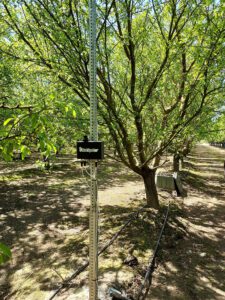
Irrigation monitoring and control systems stand out. Flow meters, pressure sensors, remote pump and valve monitoring, and soil or plant water status sensors help reduce field checks and catch problems faster. Many growers report meaningful water savings and better consistency during high-demand periods like hull split. The biggest gains usually come when the data leads to a specific action rather than simply sitting in a dashboard.
Automated pest traps are another area where the return is clear for many operations. Systems such as Semios and TrapView provide daily counts and images without requiring someone to check every trap each week. The labor savings can be significant, especially when one person manages multiple orchards. The data also helps prioritize scouting where pest activity is increasing.
Equipment guidance and telematics improve the use of machines growers already own. Reduced overlap, less idle time and better maintenance planning can lower operating costs without requiring a new robot. These systems often have a faster payback because they build on equipment already in the operation.
The real test is whether the technology improves a recurring orchard decision or operation enough to justify its total cost.
Not Every Innovation Pays Off
Other technologies are still harder to justify for most growers.
Advanced drone multispectral imagery can map stress and help direct scouting to the right locations. It works well as a periodic tool or through a service provider. Owning the entire system and using it regularly often presents challenges with processing time, weather, canopy density and the need for someone who knows how to interpret the maps.
Autonomous or multipurpose robots face similar hurdles. The capital cost is high, and labor savings depend on how the entire operation is organized. A driverless machine does not always eliminate a position. Someone may still need to handle mixing, loading, transport, supervision and repairs. The important question is whether total labor per acre actually declines.
Questions to Ask Before You Invest
Before investing in new technology, it helps to work through a few practical questions:
• What exact problem does this solve, and how much is that problem costing now?
• What is the total cost, including installation, subscriptions, maintenance and staff time?
• What will be measured, and how will success be evaluated against a clear baseline?
• Does it work with existing equipment and software?
• Who will be responsible for keeping it running?
• What happens if connectivity drops or a sensor fails during a critical period?
• Are the claimed savings based on commercial orchard experience under conditions similar to yours?
These questions help separate tools that fit an operation from those that look good on paper but add more cost or complexity than they remove.
The technologies with the clearest returns today tend to improve control over water or chemical applications, reduce repetitive work or identify problems earlier without requiring major changes to ranch operations. Technology can support better decisions, but it still takes experienced judgment to turn data into results that matter.
Publisher’s Take
The Big Picture: What to do Next
1. Solve a costly problem first
The best AgTech investments address recurring expenses like labor, water or pest management.
2. Irrigation technology offers proven returns
Monitoring systems help save water, reduce field checks and improve irrigation decisions.
3. Automated pest traps reduce labor
Remote monitoring helps growers scout more efficiently and respond faster to pest activity.
4. Not every new technology pays off
Robots and advanced drone systems can add cost and complexity without delivering clear returns.
5. Measure success before investing
Compare costs, compatibility and expected savings before adopting new technology.