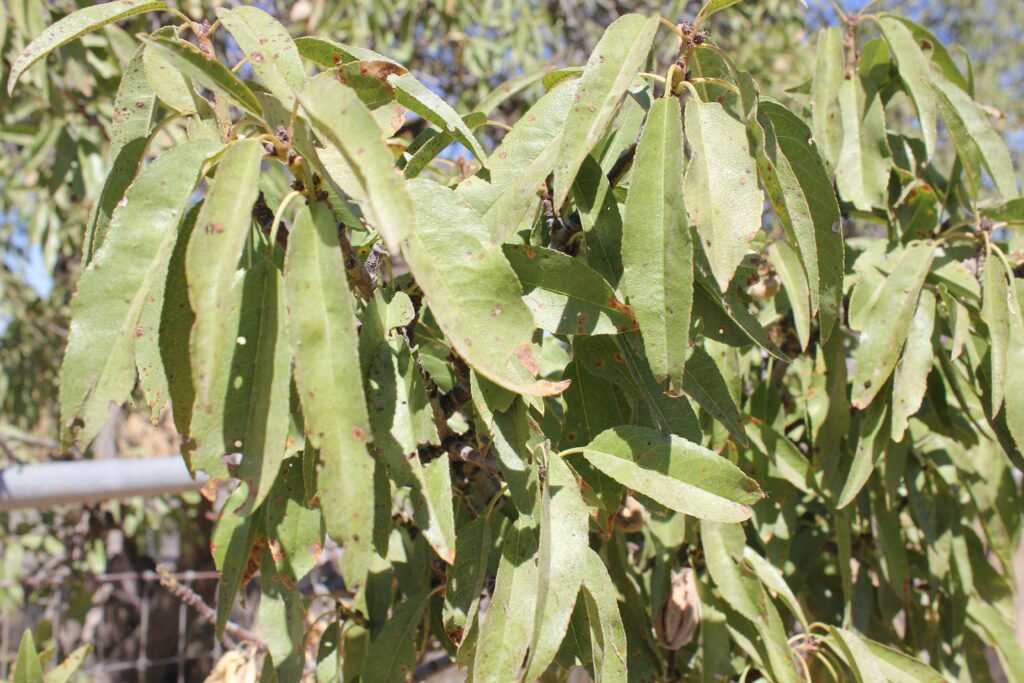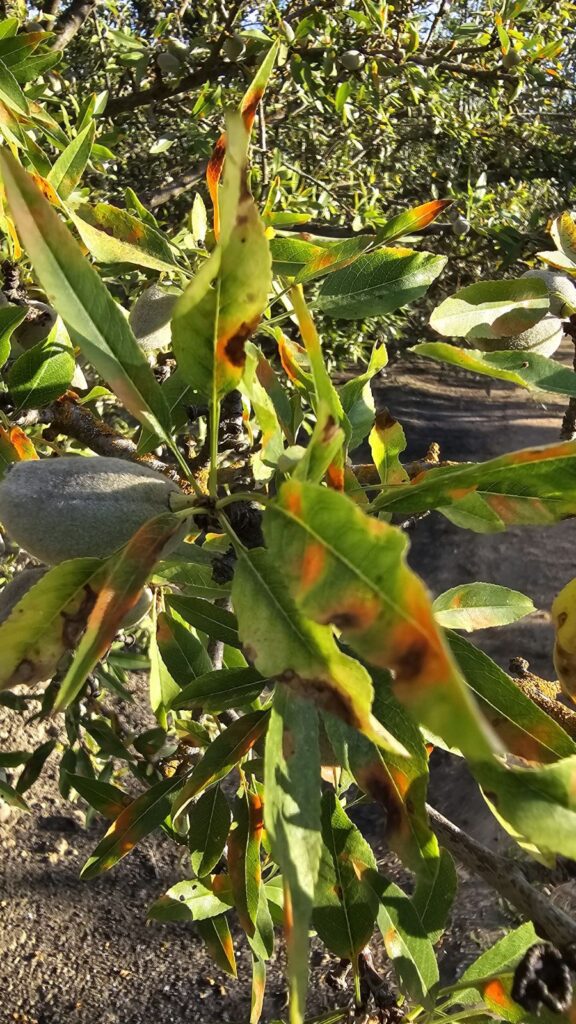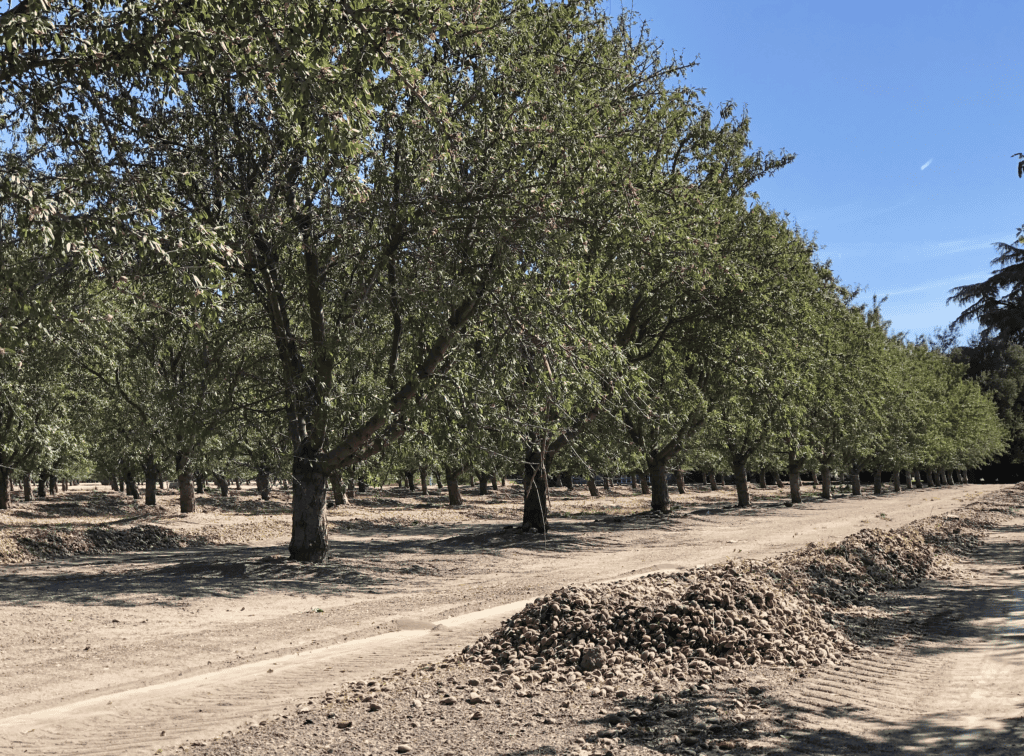
At the Crop Consultant Conference, UC IPM adviser Jhalendra Rijal, one of the lead researchers studying carpophilus beetle biology, reported on ongoing work to identify effective controls and limit damage in almonds and pistachios.
A longtime almond pest in Australia, the beetle had also been documented in Argentina and Italy by early 2020. California’s first detections were in Madera County almonds and Kings County pistachios. Rijal noted that the beetle has also been found in older walnut varieties in Stanislaus County. Orchard trap counts have increased since 2024.
Since 2023, the beetle has been confirmed in all San Joaquin Valley counties and in Sacramento Valley counties. It is most prevalent in the northern San Joaquin Valley, where Rijal reported more damage in 2026 than in 2025.
Recognizing Damage and Understanding the Life Cycle
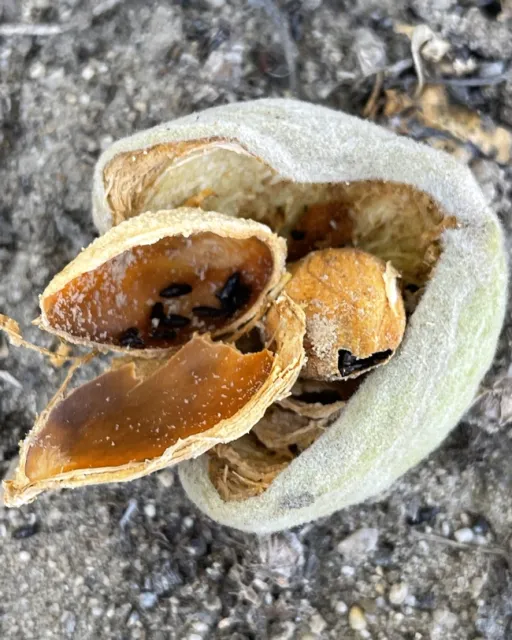
Carpophilus truncatus infests healthy nuts after hull split. Both adults and larvae feed on kernels, and they can infest the same nuts as navel orangeworm (NOW). Signs of infestation include fine, white powder mixed with frass. Some webbing may be present, but less than with NOW damage.
Carpophilus beetles belong to the sap beetle group. Other species, including dried fruit beetle, confused safflower beetle and Freeman sap beetle, look similar but do not damage tree nuts. When the small, black beetles were first discovered in California almonds, tests confirmed that C. truncatus was causing the damage.
Evidence of C. truncatus damage includes a hole chewed through the shell and oval-shaped tunnels in the kernel.
In almonds, the beetle’s life cycle lasts two to 2½ weeks, with overlapping generations.
Rijal said the beetles overwinter as adults in mummy nuts on the ground, where they prefer moist, decaying conditions. Almonds are highly susceptible during hull split, when female beetles chew through the shell and lay eggs. Emerging larvae tunnel into the kernels and feed, leaving fine, white powdery frass and debris. The larval stage lasts seven to eight days under optimal weather conditions.
When mature, larvae exit the nut and drop to the soil to pupate. UC specialist Houston Wilson is studying how soil conditions influence pupation success. The beetles likely pupate in the top 5 centimeters of soil, depending on soil type, compaction and moisture levels.
Insecticide Trials and Pheromone Research
Rijal has led insecticide trials for the past two summers, applying a spray at hull split followed by a second application two weeks later.
“Applying insecticides at hull split is not an effective strategy against CB,” Rijal concluded.
He said early trials showed no measurable effect on beetle populations, likely because of coverage challenges. Research is continuing.
Researchers are also examining infestation levels in the lower, middle and upper tree canopy. Australian studies suggest higher infestation levels in the lower canopy. Early California data show some variation in that pattern among almonds, pistachios and walnuts. The work is ongoing.
Researchers are developing a pheromone lure with partners in Australia. The collaboration has helped identify and synthesize pheromone compounds, and Wilson and his team are refining the lure’s composition and use. Wilson reported that the lures appear to attract substantial numbers of beetles, with C. truncatus making up a large proportion.
Rijal stressed that mummy nut destruction and orchard sanitation appear to be the most important foundational management strategies for carpophilus beetle. Studies are underway to improve the efficiency and effectiveness of sanitation practices and explore biological control.
Exploring Biological Control
Rijal reported laboratory bioassays showing activity against carpophilus beetle larvae from entomopathogens, microorganisms that cause disease in arthropods. Naturally occurring bacteria, fungi, nematodes and viruses can infect a variety of insect pests.
In the bioassays, Bacillus species and Beauveria bassiana produced the highest larval mortality and a lower percentage of adult emergence.

Cecilia Parsons
Cecilia Parsons has lived in the Central Valley community of Ducor since 1976, covering agriculture for numerous agricultural publications over the years. She has found and nurtured many wonderful and helpful contacts in the ag community, including the UCCE advisors, allowing for news coverage that focuses on the basics of food production.
She is always on the search for new ag topics that can help growers and processors in the San Joaquin Valley improve their bottom line.
In her free time, Cecilia rides her horse, Holly in ranch versatility shows and raises registered Shetland sheep which she exhibits at county and state fairs during the summer.
From the Orchard
to Your Next Good Decision.