Increased use of unmanned aircraft systems, commonly called drones, in agriculture comes with rules and regulations for operators.
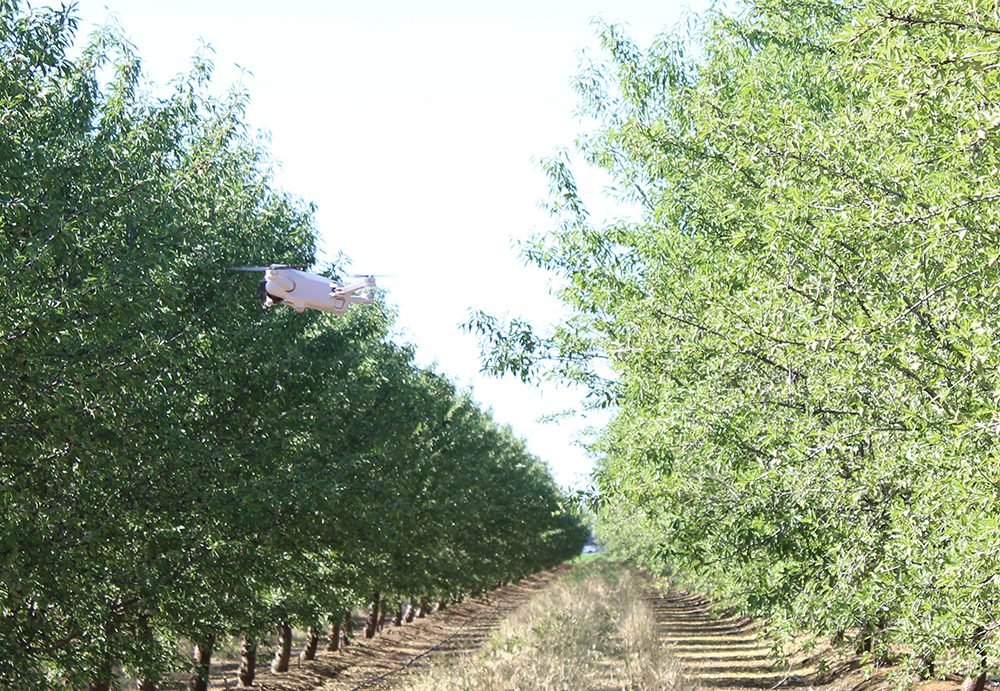
New and improved versions of these aircraft offer rapid, flexible monitoring of large areas. They can collect data and create high-resolution imagery to assist in management decisions. Drones can also deliver targeted spray applications and release beneficial insects.
“They’re fast and they’re flexible and can scan 2,000 acres in one day,” said Anderson Safre, a University of California Cooperative Extension specialist at the Kearney Agricultural Research and Extension Center.
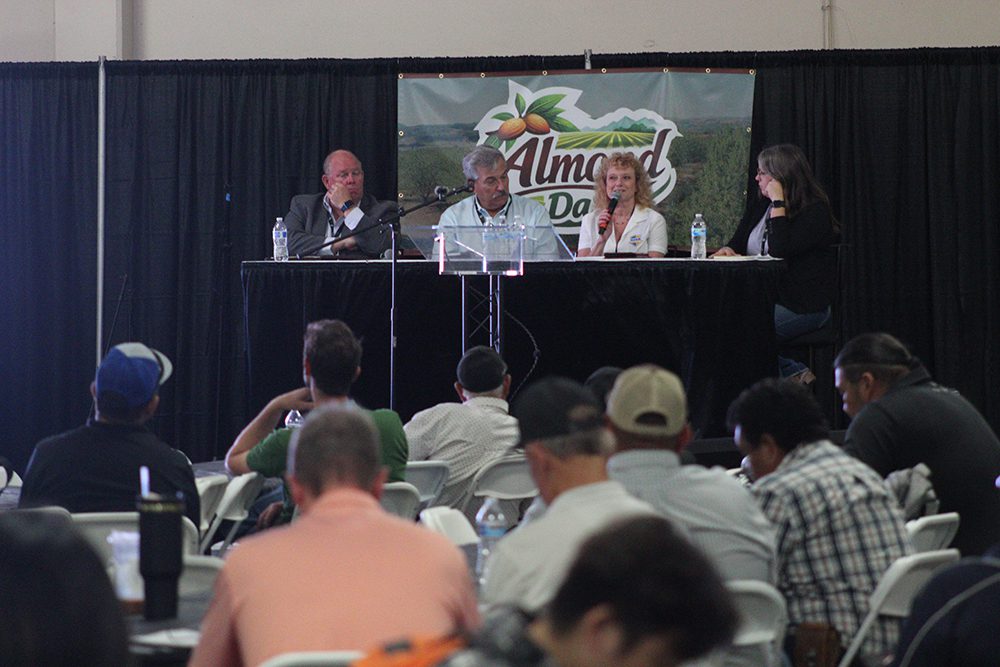
That doesn’t mean these aircraft are invincible. At a recent drone workshop at the Kearney center, participants shared several accounts of crashes and losses of these expensive pieces of technology.
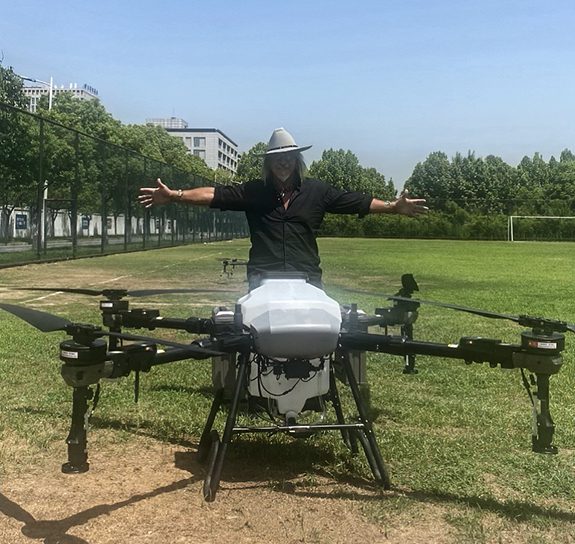
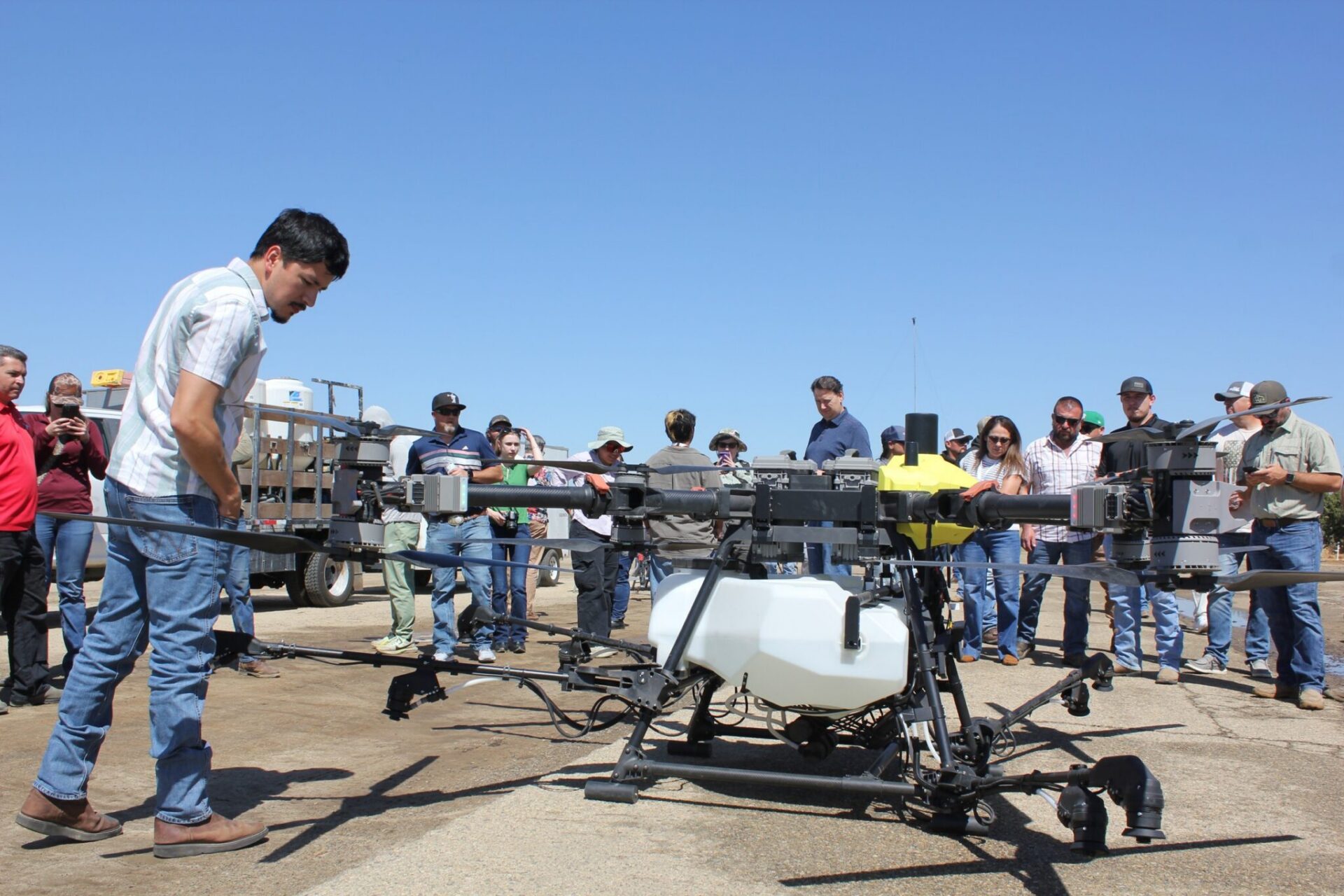
Drones can have an impressive list of features, including a GPS antenna that provides precise location data, telemetry to send and receive data between the drone and controller, and cameras and sensors for RGB, multispectral, thermal and other sensing. Batteries supply power for flights lasting 15 to 40 minutes. Large drones can carry a tank, pump and nozzles to deliver fertilizers, pesticides and other crop inputs.
Safre reported at the workshop that recent restrictions on drones include a Federal Communications Commission proposal to stop the importation and marketing of certain previously authorized foreign unmanned aircraft systems. Import tariffs also took effect on specified imported drones and components. Since December 2025, new equipment covered by the foreign drone restrictions generally cannot receive FCC equipment authorization unless exempted.
These restrictions affect some popular models and their components, Safre said.
“This is not simply a ban on flying foreign drones,” Safre said. The major changes involve federal use and funding, FCC authorization of new equipment and future market access. The FCC restrictions do not, by themselves, prohibit continued use of previously purchased drones. However, future hardware and software upgrades, replacements and repairs may face tighter supply chains and higher costs. He advised taking inventory of current equipment and stocking up on essential parts. When purchasing a new drone, he said, ask explicitly whether the exact model is currently approved or falls under any of the 2026 exemptions.
Legal Use
Sean Hogan, academic coordinator of UC Agriculture and Natural Resources’ Informatics and Geographic Information System program, explained what is needed to legally use a drone in U.S. airspace.
Recreational flyers must complete The Recreational UAS Safety Test, known as TRUST, and carry proof of completion while flying, regardless of the drone’s weight. Flying without the required proof can result in FAA enforcement action.
Hogan noted that the TRUST course is free and usually takes about 20 to 30 minutes to complete.
For small drones operated under Part 107, a remote pilot certificate is required for business or work-related flights in U.S. airspace, even if the operator is unpaid. The FAA says unsafe or unauthorized drone operations can result in fines of up to $75,000 per violation.
Earning a remote pilot certificate requires more study to pass the knowledge test. The passing score is 70%. Before registering for the test, applicants must create a profile in the FAA’s Integrated Airman Certification and Rating Application system. More information is available at iacra.faa.gov.
Agricultural dispensing operations also require FAA authorization under Part 137, along with any applicable exemptions. Requirements vary with the aircraft and operation.
Six Key FAA Rules to Keep in Mind:
1. Register drones flown under Part 107, regardless of weight. Recreational drones weighing less than 0.55 pounds are generally exempt from registration.
2. Recreational flyers must complete TRUST. Pilots in command of flights under Part 107 must hold a remote pilot certificate.
3. Obtain FAA authorization before flying in controlled airspace where authorization is required.
4. Keep the drone within visual line of sight unless the FAA has authorized otherwise.
5. Generally, fly no higher than 400 feet above ground level. Part 107 allows a limited exception near structures; other exceptions require FAA authorization.
6. Fly over people only when the operation meets applicable FAA requirements or has the necessary waiver.
Hogan directed participants to the FAA’s official drone registration site, faadronezone.faa.gov. Operators should use the official site rather than third-party registration services. FAA registration under Part 107 costs $5 per drone and is valid for three years; recreational registration costs $5 and covers the flyer’s recreational drones for three years.
Hogan said new drone pesticide applicators in California generally start with an apprentice unmanned pest control aircraft pilot certificate from the California Department of Pesticide Regulation. Pilots who already hold a DPR manned pest control aircraft pilot certificate do not need a separate unmanned certificate. In addition to passing the required exams, pilots must register with the agricultural commissioner’s office in each county where they plan to apply pesticides. To qualify for an unmanned journeyman certificate, an apprentice must be certified for at least one year and document at least 50 hours applying pesticides with a drone under a certified journeyman pilot’s supervision. The passing score on the journeyman exam is 70%.
Drone Applications
The workshop also included information on hayfield mapping and weed detection with drones. Ahmed Kayad, a UCCE agricultural engineering adviser, said nearly 90% of weeds can be detected using spatiotemporal analysis. The approach can be used in other transplanted crops to reliably predict weed populations. This information can also help organize labor across fields and within individual fields. Studies have also used drone remote sensing technologies to monitor and quantify spider mite damage in almonds.
Research by UCCE adviser Raymond Mireles showed how drones could be used to haze pest birds from vulnerable crops. Researchers noted the timing of hazing, bird species and their reactions, or lack of reaction, to the drone.
Kyle Knipper, a remote sensing specialist with the U.S. Department of Agriculture’s Agricultural Research Service, explained how plant water consumption can be monitored.
By combining thermal and multispectral data captured by a drone, software calculates crop water use from trees separately from row middles.
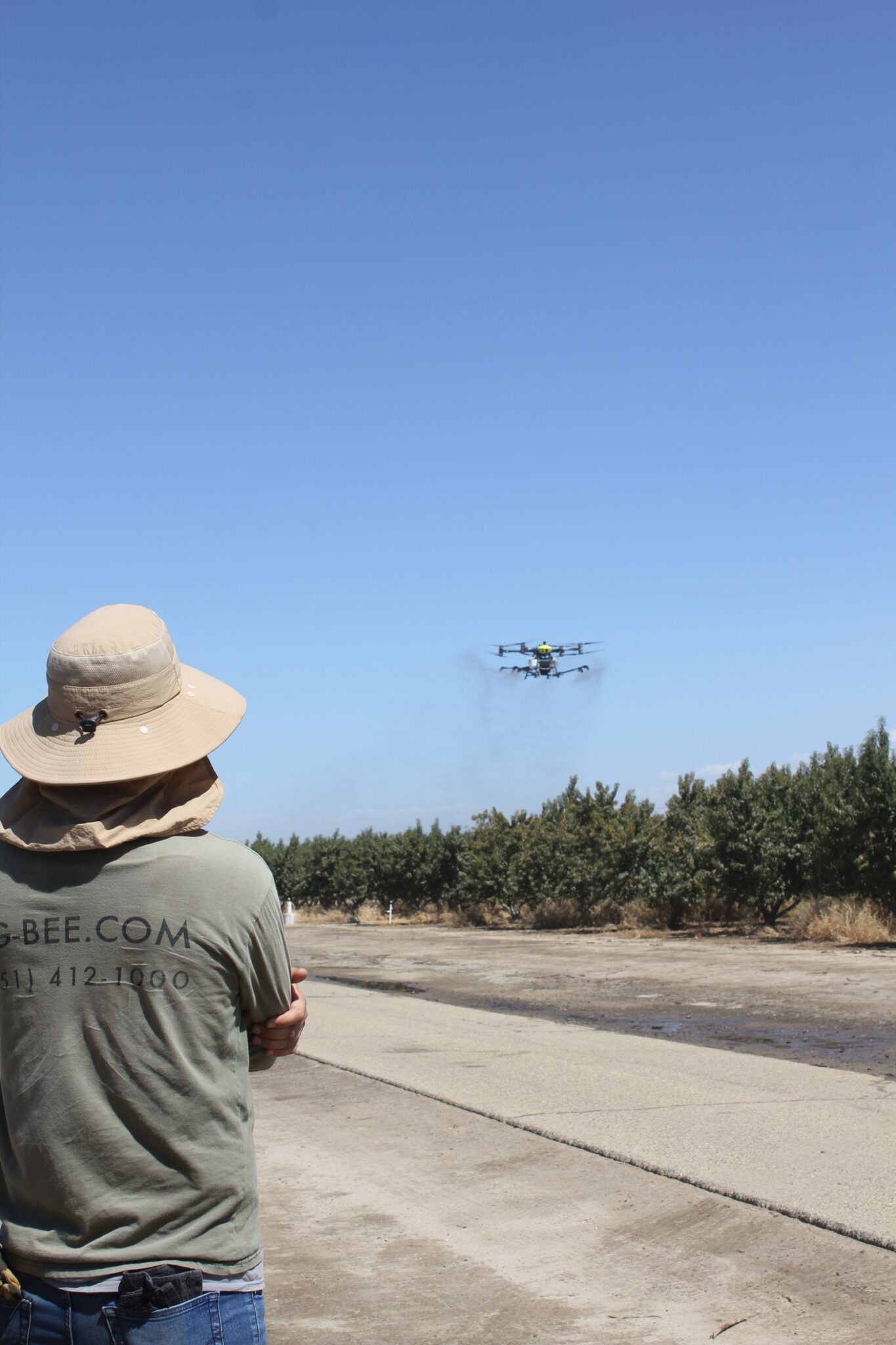
Briana Layfield, with the commercial drone service company Ag-Bee, outlined differences between drone and ground applications. Weather, terrain, crop type, products and adjuvants are among the variables associated with drone applications. With so many variables, more research is needed, she said.
“Every drone has unique characteristics that must be tested,” she said.
Drone application performance depends on both the technology and how the application is tuned. Canopy deposition and coverage, comparisons among systems and crop-specific efficacy trials are important considerations. Layfield said operators must follow applicable pesticide label directions for aerial applications when using drones.
Compared with airblast sprayers and fixed-wing aircraft, drones offer flexibility along with strong deposition performance in almond orchards, Layfield said.
Originally published in the October / November 2026 issue of West Coast Nut, beginning on page 46.

Cecilia Parsons
Cecilia Parsons has lived in the Central Valley community of Ducor since 1976, covering agriculture for numerous agricultural publications over the years. She has found and nurtured many wonderful and helpful contacts in the ag community, including the UCCE advisors, allowing for news coverage that focuses on the basics of food production.
She is always on the search for new ag topics that can help growers and processors in the San Joaquin Valley improve their bottom line.
In her free time, Cecilia rides her horse, Holly in ranch versatility shows and raises registered Shetland sheep which she exhibits at county and state fairs during the summer.
From the Orchard
to Your Next Good Decision.