 TM
TM
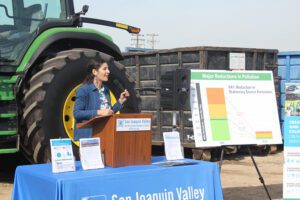
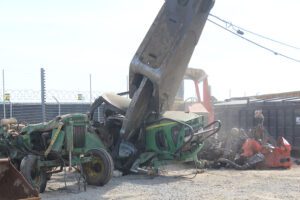
A row of rusty, retired tractors was reduced to a heap of scrap metal in March as Valley air district officials, state Assemblywoman Esmerelda Soria, ag organization leaders and local farmers celebrated the success of a program that improved Central Valley air quality.
The crushing demonstration emphasized the need for renewed state funding of the Funding Agricultural Replacement Measures for Emission Reductions (FARMER) program. From 2018 to last year, the FARMER program, the Carl Moyer Program and other incentive programs were used by the agriculture industry to replace older diesel agricultural equipment with cleaner technologies. The result, air district officials said, were substantial reductions in NOx, PM and CO2e.
The tractors crushed into scrap at Bruno’s Iron and Metal Works in Fresno represented only a small portion of the 15,000 older tractors and other high-emission farm equipment that were permanently retired and replaced with low-emission machinery. In contrast, the event featured new Tier 4 tractors, electric utility vehicles and low-dust tree nut harvest equipment.
Funding History and Impact
The program was initially funded in September 2017 when the state Air Resources Board received $135 million to reduce emissions from the agricultural sector from Assembly Bill (AB) 134 and AB 109. The bills provide funding for agricultural harvesting equipment, heavy-duty trucks, agricultural pump engines, tractors and other equipment used in agricultural operations.
In March 2018, the guidelines were approved by CARB and local air districts were tapped to select which projects to fund. Since that time, the state Legislature has funded the program with $762 million statewide to reduce ag sector emissions by providing grants to farmers to replace older, high-emission ag equipment. At the same time, the private sector has kicked in $603 million in funding.
California Air Resources Board staff worked with local air districts and agriculture to develop the proposed FARMER program guidelines, which set the minimum requirements for the program and ensured that the projects funded will provide the intended emission reductions.
Demand Outpaces Available Funding
Despite the success of the program in reducing harmful air emissions, the program was suspended in July 2025 due to demand outpacing available funds. The district currently has more than $630 million in pending applications representing nearly 6,500 pieces of equipment. Removing that equipment, the air district claims, would reduce by four tons per day of NOx emissions. More than five percent of the pending applications are for retiring Tier 0 equipment, which lack emission control.
Samir Sheikh, executive director of the San Joaquin Valley Air Pollution Control District, noted the record air quality improvements due to the significant efforts by the ag industry to retire older, high-emission machinery.
Industry and Legislative Support for Renewal
Roger Isom, president of the Western Agricultural Processors Association and the Western Tree Nut Association, stressed the importance of renewed funding, noting the program was the most cost-effective method of generating emissions reductions in the valley air district.
“We need the Legislature and this administration to find a way to fund FARMER again,” Isom said, noting that agriculture cannot pass along higher input costs as stagnant or depressed commodity prices are a significant deterrent to replacing older equipment with new low-emission models.
He also said the FARMER program isn’t a “freebie” for agriculture.
“While the state has put $762 million into FARMER, farmers themselves have contributed $603 million of their own funds.”
Lauren Sanchez, CARB chairwoman, said that $668 million was spent statewide in the effort to reduce emissions. More than half of the funding benefitted disadvantaged and low-income communities. Replaced tractors and harvest equipment represented 88% of the funds spent. Another 4% replaced agricultural trucks. Irrigation pump engines accounted for 1% of the funds and agricultural utility terrain vehicles represented 7% of the funds spent.
The valley air district reported $200 million per year in funding will be necessary to achieve the needed emissions reductions from the equipment category. This level of investment would remove nearly 40,000 tons of air pollutants statewide.
The district noted that as the state faces significant budget pressures, it is essential that priority be given to programs that can deliver the greatest public health benefits. This is important for air quality revenues, which should continue to support cost-effective programs that deliver measurable air quality and public health benefits.
Securing the funding isn’t as easy as it sounds, Isom said, but they just need to include it in the budget.
He noted that originally, it was thought it would come from the proceeds of the Cap & Invest auction, but the Legislature took $1 billion from that source to give to the Wildfire Fund for the electric utilities.
“Most recently, we understand the Legislature is going to take that and move it to the general fund, freeing up that money for things like FARMER. Again, not as easy as it sounds.”
As chair of the State Assembly Agriculture Committee, Soria has made a budget request that includes $200 million for the FARMER program, noting a proven track record of equity with more than a third of the previous funds benefitting farms with less than 100 acres.
Soria’s office noted the tremendous gap between the $2 million distributed for equipment replacement and the more than $700 million in project requests demonstrated the overwhelming need and tremendous potential for rapid emissions reductions through the FARMER program.
“California’s farmers, ranchers and food processors stand ready to invest in cleaner equipment, energy-efficient technologies, methane reduction projects and sustainable waste management practices. These investments create climate benefits, improve air quality, strengthen rural economies and help producers remain competitive during a period of rising input costs, regulatory uncertainty and ongoing drought,” Soria said.
Publisher’s Take
The Big Picture: What to do Next
- Potential Return of Funding
A $200 million annual budget request has been proposed to restart the FARMER program, creating future grant opportunities. - Replace High-Emission Equipment
Funding supports the transition from Tier 0 and other older diesel equipment to Tier 4 or electric technologies. - Prepare for Strong Competition
With more than $630 million in pending applications, growers should gather documentation early to be ready when funding becomes available. - Cost-Sharing Is Required
Farmers typically contribute a significant portion of project costs, making financial planning essential. - Environmental and Operational Benefits
Participation can reduce emissions, improve fuel efficiency and help operations meet regulatory requirements.
Cecilia Parsons | Associate Editor
Cecilia Parsons has lived in the Central Valley community of Ducor since 1976, covering agriculture for numerous agricultural publications over the years. She has found and nurtured many wonderful and helpful contacts in the ag community, including the UCCE advisors, allowing for news coverage that focuses on the basics of food production.
She is always on the search for new ag topics that can help growers and processors in the San Joaquin Valley improve their bottom line.
In her free time, Cecilia rides her horse, Holly in ranch versatility shows and raises registered Shetland sheep which she exhibits at county and state fairs during the summer.