 TM
TM
In an August 2025 PG&E press release, PG&E Corporate CEO Patti Poppe said “PG&E’s story of progress continues to unfold with another solid quarter of performance. We’re delivering energy safely to our customers every day. We’ve stabilized bills over the past year and expect them to be down in 2026.”
Does anyone in the entire PG&E territory feel like the rates are “stabilizing?” In a word, no. That’s because PG&E isn’t telling the whole story. In fact, according to a recent report by the California Public Advocates Office (PAO), a PG&E customer’s average bill could increase by 16% in 2027 and by 30% in 2030. For agricultural customers like tree nut hullers and processors or electric irrigation pumps, that is huge!
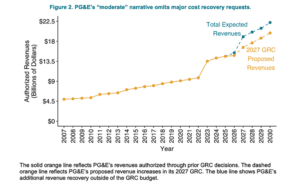
In PG&E’s most recent General Rate Case (GRC) filing, revenues are expected to increase from $14.8 billion in 2026 to $19.9 billion in 2030, representing a 34% increase. However, according to the PAO report, when additional expected revenues are included, total revenues could increase from $15.4 billion in 2026 to $22.2 billion in 2030, which amounts to a 44% increase in just four years! Does that feel like stabilizing?
“PG&E’s public framing reflects only part of the expected cost trajectory facing customers.”
What the PAO Report Shows
Diving deeper into the PAO report, it appears PG&E isn’t including several major cost impacts to ratepayers including the following:
• Energization and healthcare costs PG&E is proposing to move outside of its 2027 GRC
• Diablo Canyon power plant costs in 2027-2030
• Wildfire liability costs from the Dixie and Kincaid fires in 2027-2030
• PG&E’s requested billing system upgrade in 2027-2030
• Distribution undergrounding costs in 2028-2030
• PG&E’s Wildfire and Gas Safety Application in 2027
• PG&E’s 2024 wildfire-related cost recovery (WMCE) application in 2027
• Future expected wildfire-related cost recover (WMCE) applications in 2029-2030
• PG&E’s outstanding balances in various memorandum accounts in 2028
The PAO report goes on to say “While total expected revenues increase substantially when all projected recovery requests are considered, PG&E’s public messaging focuses on a narrower subset of costs. When the PG&E authorized and proposed GRC revenues are compared to total expected revenue recovery from all programs, it is clear that “PG&E’s public framing reflects only part of the expected cost trajectory facing customers.”
About the Public Advocates Office
Now I am sure some readers are wondering who the “Public Advocates Office” is. This is a description posted on the PAO website:
The Public Advocates Office (also known as Cal Advocates) was created in 1984. We are the only state entity charged with helping ensure Californians are represented at the California Public Utilities Commission and in other forums. We do this mainly by recommending solutions and alternatives in utility customer best interests for decision-makers to consider when making policy and investment decisions on how to advance the state’s energy, water and communications goals.
Our team of dedicated and passionate analysts, engineers, auditors and lawyers work hard every day to put affordability, accessibility and equity at the forefront of our advocacy efforts, because utility services are essential. We help ensure this by: (1) proposing creative ways to lower utility bills, (2) helping transition to a clean energy future at the lowest possible cost, (3) identifying new ways to maintain grid reliability, (4) ensuring that utilities are safely and efficiently maintaining their systems, and (5) assisting with prioritizing access and affordability to essential broadband and water services, especially in underserved or unserved areas.
The PAO report highlights four areas or key factors that are really shaping PG&E’s proposal and its revenue impact. First, it excludes major cost recovery requests including memorandum account balances. Second, PG&E is continuing to seek significant cost recover outside of the GRC budget, such as memorandum account balancing, moving healthcare costs and undergrounding of lines out of the GRC process. Another major cost recovery item moved out of the GRC is with wildfire mitigation cost recovery. To best illustrate these discrepancies, the PAO charted GRC proposed revenues vs. the Total Expected Revenues:
Every Californian knows their electric bills are skyrocketing, especially industrial and commercial customers, including tree nut hullers and processors. We are at the mercy of a monopoly forced upon us as the sole provider of electricity with no options. But with the publication of this recent important report maybe people are waking up to the fact this must stop.
The Ag Energy Consumers Association (AECA) has made this a priority and is expending all its resources in fighting this General Rate Case and drawing attention to the disparity between what is reported in the GRC and what is happening in the real world, and it isn’t “stabilizing.” Next time you get a letter or email from PG&E about their efforts to “stabilize” rates, send them a copy of the PAO report. The report is available on the Public Advocates Office website in the Press Room section under Reports and Analysis.
https://www.publicadvocates.cpuc.ca.gov/-/media/cal-advocates-website/files/press-room/reports-and-analyses/260305-public-advocates-office-pge-revenue-requests-fact-sheet.pdf

By Roger A. Isom | President/CEO, Western Agricultural Processors Association
Roger is President/CEO of the California Cotton Ginners and Growers Association and Western Tree Nut Association. He brings over 30 years of regulatory and legislative advocacy experience, specializing in environmental and safety matters. Roger’s responsibilities include the management of both Associations’ staff and day-to-day operations. Roger is also the President of the Ag Energy Consumers Association (AECA), board member and Past President of the Ag One Foundation at California State University Fresno, and manages the Navel Orangeworm Action Committee (NOWAC).