 TM
TM
As the growing season moves into summer and closer to harvest, the window for influencing walnut yield and quality begins to narrow. But several pre-harvest decisions still have the potential to shape harvest outcomes. Across orchards, that sometimes means looking at what’s worked in the past and adjusting based on current conditions. In a season where input costs, timing and efficiency all carry added weight, even small changes can have an impact.
Insights shared by UC Cooperative Extension advisers during the North Valley Nut Conference earlier this year pointed to a few areas where growers can still make meaningful improvements in efficiency and risk management. Those decisions, while often part of routine management, take on added importance as harvest approaches and opportunities to correct course become more limited.

Weed Control Decisions
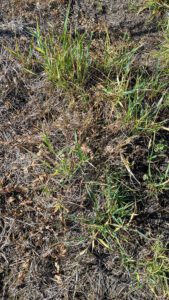
Weed management programs in walnut orchards are often built on consistency, but that consistency can come at a cost. Many growers rely on programs that have worked year after year, but over time, some of those same approaches can become less effective if they aren’t adjusted.
“A surprising number of times I’ve talked to someone and they’re using the same herbicides every year to target the same weeds,” said UCCE Agronomy and Weed Science Adviser Ryan Hill.
While a lot of growers have systems that appear to be working, repeating the same approach annually can increase the risk of resistance and limit long-term effectiveness. Hill said diversifying your herbicide treatment choices can help with that resistance management.
In some cases, that diversification can also open the door to more efficient control and fewer applications over the course of the season.
Weeds also compete directly with trees for water and nutrients, which becomes more significant as the season progresses and irrigation demands increase. In addition to reducing efficiency, heavy weed pressure can interfere with orchard floor conditions that could complicate harvest operations if not addressed early.
That shift doesn’t necessarily mean overhauling an entire program, but it does require some attention to how and when products are used. Timing plays a critical role in how effective applications will be, particularly when targeting specific weed emergence patterns or managing more difficult weed species.
“You need to think about when your weeds are emerging and when your most effective timings are going to be,” Hill said.
He pointed to opportunities to adjust programs by incorporating different chemistries or approaches, including residual herbicides and more strategic application timing. Looking beyond a standard program and considering alternative approaches can help improve overall performance.
“What if you could reduce that number of applications? What if you could have more effective weed management if you step away from the typical way you do things?” Hill said.
Those kinds of adjustments can not only improve control but also reduce pressure on commonly used products over time, helping preserve their effectiveness for future seasons.
Timing for Uniformity and Harvest Efficiency
As harvest approaches, timing decisions become increasingly more important in managing crop quality. The problem with walnuts, according to UCCE Orchard Systems Adviser Clarissa Reyes, is that the kernel and the hull mature at different times, she said. That difference in maturity can affect how efficiently nuts are removed and how well kernel quality is maintained, particularly if harvest timing isn’t aligned with crop development.
“We want to try to reduce the time between kernel and hull maturity to get your kernel at the highest quality,” Reyes said.
Ethephon is one tool used to help close that gap by advancing hull maturity, but its effectiveness depends largely on proper timing and checking for packing tissue brown to make sure that you’re applying at the right time. Applying too early or too late can reduce its effectiveness and limit the potential benefit.
To determine readiness, growers should evaluate packing tissue brown across the orchard. While research has explored differences within the canopy, Reyes noted that growers can simplify the process in practice and still get reliable results.
“If it’s easier to collect the nuts at the bottom of the tree and not have to get up in like squirrel to check the top, then we can assume if all of the nuts at the bottom of the canopy have reached packing tissue brown, then the rest of the tree has,” she said.
Her research, conducted on Chandler and Solano varieties, also showed that ethephon applications can influence harvest timing, though results may vary depending on conditions such as weather, humidity and overall tree health.
“There is evidence here that ethephon is effective for moving up your harvest dates,” Reyes said.
Even so, she emphasized that decisions should be based on orchard-specific conditions, including tree health, weather and harvest logistics. Growers who are able to closely monitor their orchards and adjust accordingly are better positioned to capture the benefits of those timing decisions.
We want to try to reduce the time between kernel and hull maturity to get your kernel at the highest quality.
— Clarissa Reyes, UCCE orchard systems adviser
A Risk Beyond the Orchard
Some things aren’t entirely in a grower’s control, though, and not all pre-harvest challenges originate within a grower’s own operation. External factors can influence orchard performance, and in some cases, those pressures can be difficult to manage alone.
Unmanaged or abandoned orchards can create additional pest pressure, particularly when sanitation isn’t maintained. County ag commissioners at the conference noted that these situations can impact neighboring blocks and are becoming a real concern in some areas, especially as more acreage comes out of production.
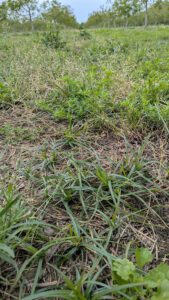
Recent updates under Assembly Bill 732 have expanded enforcement tools, allowing counties to issue notices of violation and take action when abandoned properties pose a risk to surrounding agriculture. For growers, awareness of surrounding conditions and early communication with local officials can help address issues before they escalate and begin to affect yield or quality.
“If you do notice a problem, give us a call and we’ll do our best to step in,” said Butte County Ag Commissioner Katherine Quist.
In situations where neighboring conditions are contributing to pest pressure, documenting concerns and reaching out early can help prevent longer-term issues that are more difficult to manage later in the season.
Publisher’s Take
The Big Picture: What to do Next
- Rethink Weed Programs
Repeated herbicide programs can lead to resistance. Rotate chemistries and adjust timing for better control. - Focus on Application Timing
Match herbicide and ethephon timing to crop and weed development for maximum effectiveness. - Check Packing Tissue Brown
Use packing tissue brown as a reliable indicator for ethephon timing to improve harvest uniformity. - Expect Variability by Orchard
Weather, tree health and orchard conditions all influence timing decisions and outcomes. - Watch Neighboring Orchards
Abandoned orchards can increase pest pressure. Report issues early to local ag commissioners.