 TM
The potential for a very strong El Niño is strengthening. This southern oscillation is no child’s play. The Pacific is over 2 degrees warmer and tropical depressions have already been threatening. That’s what brings in the old “Pineapple Express,” or as climate change doom and gloomers have rebranded “atmospheric rivers!” I have news for them; the climate has been changing for millennia. We may run into issues applying soil amendments to our fields before they get soggy. It’s what we do to prepare that makes the difference between success or failure.
Start with Soluble Nutrition
Plants drink their food. It has to be made soluble and plant ready. What does that mean? Almost every nutrient is a salt with a salinity index. Salts are cations attached to anions. Positively charged elements connected to negatively charged elements or molecules. Some of those stick together really well, like calcium phosphate, gypsum, popcorn sulfur, etc.
Some of those pull harder on the water than the roots can and have a high salinity. High EC soils act like a stronger magnet for water than turgor pressure, “drinking through a straw,” can be created in the roots. Some have a high salinity index and can burn roots and tissues. Potassium thiosulfate is very soluble and overapplying can burn roots. We never see it unless we are digging.
Calcium thiosulfate is a little different than the potassium thiosulfate “Thio” molecule because it is attached to a double charged cation and doesn’t release as easily. Both products can be effective when applied correctly but you have to have a plan. Check the salinity and salinity index when choosing derivatives. It can make a huge difference. Apply the amounts accordingly with your soil types. Heavier soils can handle more. Sandier soils, not so much. Smaller shots more often in lighter soils.
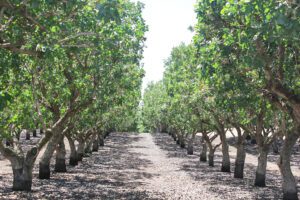
Move the Good Stuff into the Root Zone
When we solubilize those salts they can now attach to the soil colloid. The better nutrients like calcium, potassium and magnesium are stronger magnets and stick to the soil, releasing sodium to the soil solution. This creates the ability to leach as water moves down. The better nutrients stay higher in the soil profile, where a more dense concentration of feeder roots live.
“Feed those trees early and fill the wetting pattern with the good stuff a plant can actually drink.“
Using soluble nutrition that can disassociate changes the percentage of good to bad in that wetting pattern. As we fertigate, water moves out and down into the outside of the bowl shape the roots follow. Fill the bowl with the good stuff and you have a better chance of getting them into your plant. The bad stuff moves to the outside of the wetting pattern, “the salt ring.”
Add Carbon to Help Nutrients Stick
Now, let’s make it stick. Add carbon. Organic acids are not to be confused with organic farming practices. Organic acids are called that because they are large carbon chains. Carbon chains chelate and complex. Those terms just describe how nutrients are locked up, held loosely, are transported or assimilate.
Think of humic as the buffet; the big, long table of food everyone is grabbing meals from. Fulvic, gluconic, malic, citric, lactobionic, lactic, etc. are like the plates at the buffet. Smaller carbon chains that bring the food into the plant, create systemic or induced resistance, bio-regulate, and enhance plant systems. The more of these carbon chains we have in the soil, the better chance we have of getting nutrients into a plant. They allow nutrients and more importantly cations, to remain loosely bound to carbon instead of their more preferred anion.
Think of it like putting minced garlic in olive oil. Nutrients can remain submerged there, suspended, part of the mix but not reacting much with anything, waiting to be released to the “salad.”
Rethink Fall Amendments in a Wet Year
Let’s take a look at gypsum or sulfate of potash. Mother Nature produced those salts. They like being locked up together. They can be very beneficial to wedging the ground open and allowing water to penetrate and run through. In most soils, however, gypsum will need an acre-foot of water to solubilize the normal portion of molecules. We may get that this winter, but we certainly don’t want to see it running off the berms in heavy rains.
And if the rains come early, we may not get across all our acres quickly enough to apply it. Same goes for sulfate of potash (SOP). Often it gets applied in late October when uptake is becoming less efficacious. If we do get those heavy rains, potassium is a little less leachable than sodium, but not much.
How much do we lose? Fertigating soluble calcium and potassium may have a much more dramatic effect, more quickly in a year like this. And if we start now, we are feeding and not just amending the soil. Do both. Feed and amend with a soluble form, more quickly this season. That should better prepare our trees for winter, while increasing carbohydrate storage “photosynthesis” right now.
Start as the Last Trailers Leave
Be prepared for what may come. Start now, as the last trailers leave the field. Feed those trees early and fill the wetting pattern with the good stuff a plant can actually drink. If we have time to amend before the rains come, make that happen and incorporate it into your soil. Mother Nature may be bringing us El Niño, but she won’t be “kidding” if it hits hard.
Publisher’s Take
The Big Picture: What to do Next
1. Start as harvest wraps up
Use the postharvest window to address tree nutrition before wet conditions potentially limit orchard access.
2. Choose soluble forms carefully
Consider salinity and salinity index when selecting nutrient forms and adjust applications for soil type.
3. Use smaller shots in lighter soils
Kreps recommends smaller, more frequent applications in sandier soils, while heavier soils can handle more.
4. Feed and amend
Use soluble nutrition to feed trees now while still addressing longer-term soil amendment needs.
5. Get amendments down before the rain
If conditions allow, apply and incorporate soil amendments before heavy winter rains make fieldwork difficult.