Listen to the audio version of this article. (Generated by A.I.)
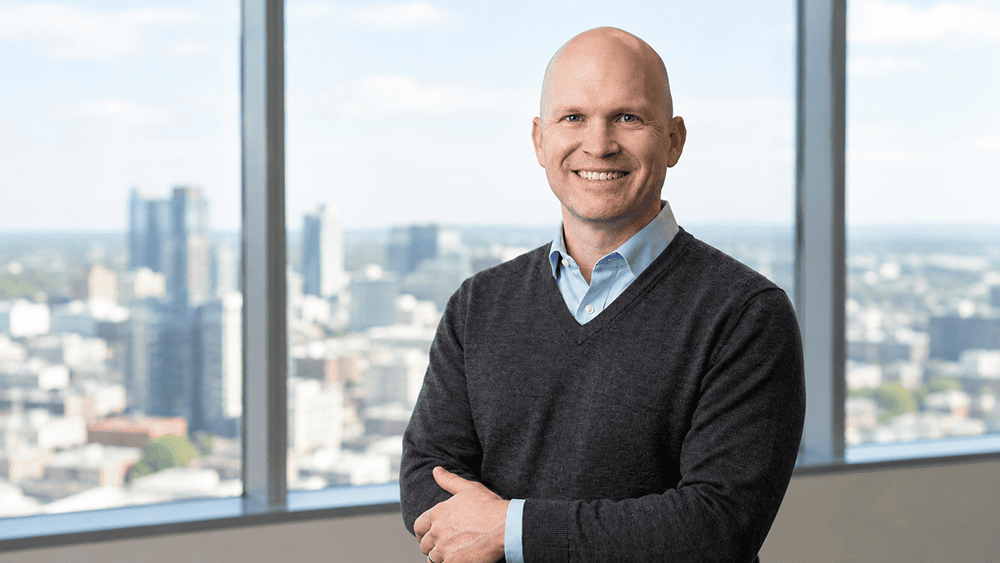
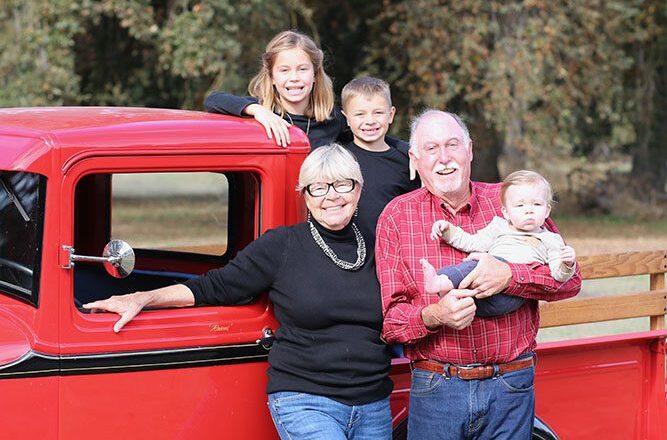
Despite a rich family farming history, Mitchell Yerxa, fifth-generation owner of River Vista Farms LLC, didn’t start out to join the family business.
“I wanted to go the plant breeding route,” he said. “I loved science since I was a kid, chemistry, physics, everything. I assumed I’d get a Ph.D. and work somewhere else in the world.
“I was working in Iowa for Monsanto as a plant breeder intern, and my boss, Nate Enfield, said, ‘I don’t think you understand what you have at home in California with a family farm.’ He told me to go work for my family for two years, and if I hated it, he’d give me a job back the next day.”
Yerxa went home and stayed.
“It’s been 14 years,” he said. “I don’t think I could do anything else. I love the job, the people, the days in the field, how every day is different. I haven’t spent a day in a cubicle or in front of a computer screen. I’ve just done what the land asks for.”
We asked Yerxa to share his thoughts on his family business and the state of the nut industry with West Coast Nut:
Tell us a little bit of the history of your operation.
My grandfather’s grandfather was named W.A. Yerxa, and he helped to start the Sunsweet Co-op and was one of the first farmers to bring the French plum to California. He not only was a grower, but he also had a prune dipper in Princeton, Calif.
His son Max Yerxa had a brutal time farming during the Great Depression and ended up getting out of farming and into banking. His son, Charles Yerxa Sr., was drafted into World War II and served in the Pacific on an aircraft carrier where the men would play poker while in their downtime. When he got out of the war after 1945, there was a serious need for young farmers, and Charles Tuttle Sr. helped my grandfather get back into farming. He started growing tomatoes, peas, sugar beets, prunes and walnuts from 1945 to 1991, when he passed.
Diversification has helped us weather the ups and downs of agriculture while keeping the next generation involved
in the farm.
But in our family, because he was an avid poker player during the war, we [jokingly] like to say he went from being a gambler to being a gambler.
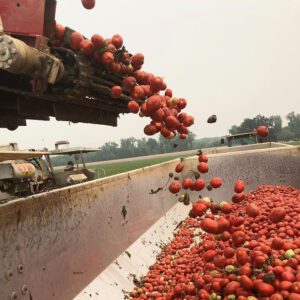
Currently, we grow about 16 different crops. We grow processing tomatoes, wheat, rice, corn, alfalfa, squash, cucumber, watermelon, cantaloupe, walnuts, almonds, pecans, sunflower, safflower and coriander.
But essentially, we just try to be as diversified as we can be without having to buy a whole bunch of new equipment and learn a whole bunch of new things. We try to stay diversified within a region.
My dad’s family was one of the founding members of Sunsweet, so that was one of our legacies in the tree industry. My grandfather got into the prune business when he started farming the Morton Ranch in Grimes, Calif., and it had prunes on it. So began the next generation of Yerxa prune growers.
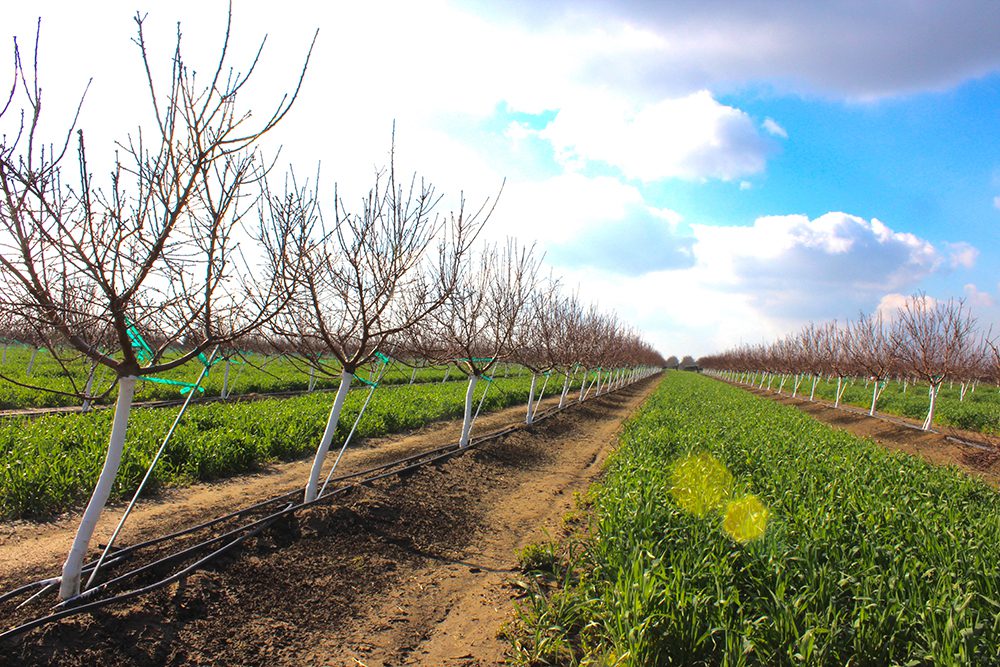
Then my grandfather planted walnuts in the 1950s, and then my dad planted his first almonds in 2005. We planted our first pecans in 2014 or 2015. We’re just slowly diversifying in the nut industry as there’s space for it.
We have about 300 acres in walnuts, 300 in almonds and 60 in pecans.
How did you decide to grow pecans?
We have two pieces of ground that either get flooded by the river or that have horrible seepage. It’s just the way that the river bends, and the water just comes up hydraulically in May. We had one of our landlords say, ‘I’d sure love to have a crop here that could survive high-water seepage years. What do you think about pecans?’
Fast forward 12 years and you couldn’t ask for a nicer-looking orchard, regardless of spring seepage.
Once we decided to put his orchard in Grimes, Calif., into pecans, we decided to put another piece of ground we farm north of Colusa into pecans where the river can come up during the winter and kill off any attempt at a winter wheat crop, and if you try to plant a summer crop the deer eat it as fast as you can plant it.
Funny enough, we called Linwood Nursery when our trees were underwater for 60 days in the summer and said, “You guys should take some drone videos of the river over the top of these trees where you can just see the tops of the trees and have marketing that says if they can survive this, they can survive anything.”
The Sacramento River receded, and the trees took off growing. At that moment, we were believers that pecans have a place in our operation.
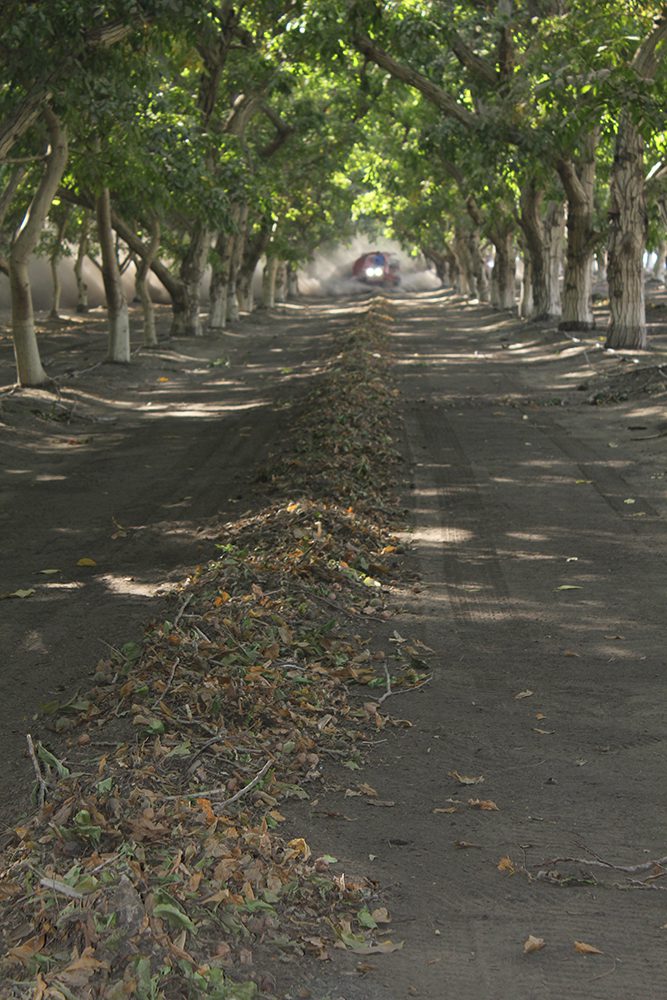
Pecans may not be for everybody. They take seven years to get to harvest. You have to harvest them around Thanksgiving, and it’s scary not knowing if you will get harvest finished before the winter rain starts.
But for us, it’s a nice mix. We’re able to use the same shakers, sweepers, harvesters, same men and same trucks and trailers, so it works well.

Talk about how you manage the labor situation.
We’re lucky. We’ve had a labor camp and labor vans since the 1950s, so we’re able to utilize the H-2A program. We have 12 guys every year come up from Mexico from April to November.
Having them there for those six months is a godsend. We know when we plant our tomatoes, about a month later we’re going to need hand labor doing sprinklers, hoeing, spraying or whatever.
Having the increase in workforce when we need it and not having them all winter when we don’t need it is massive. Having the ability to size our workforce based on our needs is incredibly beneficial to us.
Has managing the H-2A process gotten harder?
It’s become easier for us because we have the same guys every year. They are cousins and nephews of the men that work with us already, so they feel right at home. It’s a real family affair.
If I can put a plug in for them, we do our H-2A paperwork through Western Growers. They handle everything from the Mexican consulate to the U.S. to the border crossing. It’s an absolute dream how easy it is using them. We basically just give them names, emails and phone numbers, and they take care of the rest.
What is your favorite part of farming?
I’ve always loved learning, and farming is constant learning. I’ve learned everything from equipment maintenance to planting, to irrigation and more from the guys on the ranch. There’s always something to learn, and I can always ask someone who’s been doing it for decades to teach me.
I was even able to participate in an ag roundtable hosted by Reps. Thompson, Costa and Garamendi, talking about California ag with California farmers. Those are opportunities I wouldn’t have had elsewhere.
What I love most is the community. Even though farmers are technically competitors, we’re not really in competition. We help each other. People call and ask for advice, and we do the same.
I remember during a drought, we didn’t have water for one orchard. Our neighbor Clark offered us his well water from next door. He is not a part of the irrigation district, but he dumped the water into the canal so we could irrigate our almonds and keep them alive. We asked what he wanted in return, and he said, “Just buy me a drink.”
That saved our orchard.
That was my introduction to how much people in this industry help each other.
What are your thoughts on regenerative practices?
I think what’s interesting is if you go to any of these talks, so much of what they say is the baseline is that it has to work for you.
In dry years, there are so many things you can incorporate because you have time. In wet years, like we’ve had recently, you’re always trying to get things worked under and ready before you have to get your transplants in.
The biggest thing I like is they talk about if you can increase your organic matter by 1%, your ground will hold 20,000 gallons of water per acre. So, for every 1% you increase, you’re helping the whole system.
You have to be willing to adapt, whether that means trying new crops, new technology or new ways to stay profitable.
We started with the easy stuff: chicken compost and cover crops.
Getting to the next level with animal agriculture adds another layer with fencing and partnerships, so we haven’t quite gotten there yet. We’re exploring how to use plants and organic matter to build soil health, which leads to a healthier environment for crops.
From an orchard standpoint, we’re trying to use different plant species to break up compaction in wheel tracks and out-compete weeds.
In young almond orchards, we have issues with fleabane, so instead of constantly disking and mowing, we’re using fast-growing grasses to out-compete it. We’ve had good luck with that.

What are three things that keep you up at night about growing nuts?
I think the biggest thing is markets, especially in walnuts. There are a lot of walnuts in China and Chile, and they’re filling global markets at the same time we are.
We have so much money invested in orchards: prepping ground, planting trees, irrigation systems and then waiting years before production.
It makes me nervous because we don’t know how global consumption will change and we don’t know how shifts from other crops like wine grapes continue to change markets.
There’s been about 100,000 acres of grapevines pulled out in three years, and that land will be replanted with something: almonds, walnuts, pecans, olives, etc. That could oversaturate those markets.
We’re already seeing that trend in walnuts. We pulled out 180 acres over the last two years because it wasn’t viable to have an underproducing orchard with rising costs and lower prices.
Global competition and market saturation are a big concern.
Another concern is California water. We had the Department of Water Resources speak at the Colusa Farm Show, and when I asked what the end goal of the SGMA research was, the presenters said they didn’t know. That’s concerning when policies are being made without a clear objective.
To give context, they were talking about the millions they have spent and the number of scientists and researchers they have brought on board, and 10-plus years later they have no idea what their end goal is.
It feels like it’s not just about groundwater, but agriculture water use in general, and that’s scary.
At the same time that the state is wringing their hands about drought, there is water flowing all winter in high river periods that isn’t being captured, and farmers are willing to help create solutions like reservoirs and groundwater recharge. There is a disconnect between policy and practical solutions, and that uncertainty is scary.
What are you most hopeful about when it comes to farming nuts?
I’m hopeful because we’re growing a perfect product. It’s high quality, all natural, high protein and low fat. I think people are starting to realize the downsides of processed foods, and there’s growing interest in healthier options.
I’m also involved in a fruit drying operation called Sunrise Dryers at the old Colusa Sunsweet plant, where we take products that would have gone to waste and turn them into dried snacks with a longer shelf life.
Every time someone tries those products and is surprised by how good they are, it shows there’s untapped potential in our fresh fruit markets. I think as people shift toward healthier snacking, choosing nuts or dried fruit instead of processed foods, we could see stronger domestic demand.
Younger generations are already forming habits around health, like staying hydrated, and that mindset can extend to food choices. There’s a lot of opportunity if we can connect consumers with these products and their growers.

What advice would you give to a young person today who’s interested in getting into ag?
The biggest advice I can give is to find a mentor. If you can find the chance to work for somebody who’s been in the game for a long time, intern for them, work for them, learn from them or just ride along in the pickup with them.
The more time you spend with people who have been through the fires, the more you realize how much there is to learn. I’ve had the opportunity to be side by side with my dad for 14 years in this game, and I don’t think anybody is better off than I am, because he took the prior 40 years of experience and has been teaching me little by little, day by day. It’s invaluable.
You may not even know what you need to learn. Sometimes it’s boardroom etiquette, sometimes it’s how to walk a field, sometimes it’s understanding what a crop needs.
My dad has been farming for 54 years, and he’ll still call a neighbor and ask why they’re doing something a certain way. The learning never stops. It’s not about doing things better or worse, just finding more effective ways.
There’s so much to learn throughout your entire career if you’re open to it.
From the Orchard
to Your Next Good Decision.