 TM
Fumigation is an important tool across California’s tree nut industry, from managing pests in the orchard to protecting harvested product. But it’s a tool that’s also receiving increased attention from regulators, making performance, planning and proper use increasingly important.
“Fumigation is under the microscope,” said Roger Isom, president and CEO of the Western Tree Nut Association (WTNA).
He said fumigation is receiving increased scrutiny from state, local and federal regulators, including the California Department of Pesticide Regulation, air quality regulators and the U.S. Environmental Protection Agency.
“And unfortunately for us, it’s a necessary part of the business,” Isom said. “People aren’t going to buy our product if they find bugs in it.”
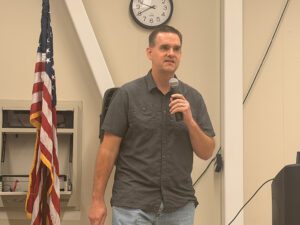
Isom and other industry, research and regulatory speakers discussed those challenges during a July 30 WTNA Fumigation summit, where presentations ranged from application performance and permitting to new research on managing roof rats in orchards.
Getting the Treatment Right
As fumigation costs increase, growers have more reason to make sure treatments deliver the intended result.
John Mueller, owner of The Fumigation Company, said successful fumigation begins with treating an application as a scientific process rather than simply completing a task.
“Fumigants were born from pretty deep science, and many times applicators treat fumigants as really just tactical tasks when we really have to take that science and move it forward in our applications,” Mueller said. “If we ignore what’s needed for these tools to be effective, then that’s when we fall off on them.”
Factors such as correct pest identification, fumigant concentration, temperature and the length of time an effective concentration is maintained can determine treatment success.
“When spending goes up, commodity processors, commodity growers, they want to make sure they’re getting value for the dollars.” — John Mueller
Mueller said increasing fumigant prices have also put more pressure on applicators to demonstrate that growers and processors are receiving value from a treatment.
“When spending goes up, commodity processors, commodity growers, they want to make sure they’re getting value for the dollars,” he said. “Sometimes you have to lean into technology to drive that.”
That can include monitoring technology that documents fumigant concentrations and helps determine whether the conditions necessary for an effective treatment were reached and maintained.
New Research Tests Fumigation for Roof Rats
New research presented at the summit showed how fumigation may also fit into management of a pest becoming increasingly problematic for nut growers.
Roger Baldwin, UCCE human-wildlife conflict specialist, said roof rats are rapidly expanding through agricultural areas of the Central Valley, particularly orchard systems. Although roof rats are typically considered an arboreal species and spend considerable time in tree canopies, Baldwin said researchers have found them using ground burrows in California nut orchards.
That behavior creates an opportunity for burrow fumigation.
Roof rats can cause several types of orchard damage. They feed directly on nuts, can girdle branches and damage drip lines, emitters and sprinklers. Girdling that extends around a branch can kill it, eliminating its future production.
Baldwin and his research team tested aluminum phosphide, pressurized exhaust containing carbon monoxide and a carbon dioxide injection system against roof rats.
All three exceeded the researchers’ 70% threshold for an effective treatment in initial trials. Pressurized exhaust achieved greater than 90% efficacy, while aluminum phosphide was above 80%. The carbon dioxide treatment also exceeded 70%.
Application time differed, however. Aluminum phosphide took a little more than two minutes per burrow system and was about twice as fast to apply as the other two treatments tested.
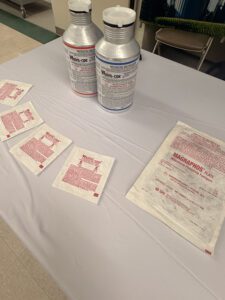
Based on those results, researchers selected aluminum phosphide for a larger field-scale evaluation at four orchard sites. It performed well at three of the four sites, including 100% efficacy at one site. Across all four sites, average efficacy was close to 80%.
Baldwin said soil moisture is an important consideration when using burrow fumigants. Moist soil helps contain fumigant gases within the burrow system, while dry soil can develop cracks and larger pores that allow gases to dissipate.
“Soil moisture is always key,” Baldwin said. “Keep that in mind when you’re thinking about using these fumigants. We need to use them when we have good soil moisture.”
The research also highlighted tradeoffs between fumigation methods. Although aluminum phosphide was effective and relatively quick to apply, Baldwin noted it carries substantial use restrictions. Pressurized exhaust was highly effective and can make connected burrow openings easier to identify as smoke escapes through them. Carbon dioxide injection offers another option, including in some situations where setbacks from buildings limit other fumigation approaches.
But fumigation should not stand alone.
Baldwin said growers should consider it as one component of an integrated roof rat management program that can also include baiting, trapping, habitat modification and potentially biological control.
“Ultimately, we want to utilize multiple strategies,” he said. “So fumigation certainly can be one part of an integrated approach but certainly consider some of the other options that are out there, including bait application, trapping, biocontrol, et cetera.”
Plan Before Problems Develop
Planning also matters when fumigation involves regulated equipment or operations.
Nick Peirce, northern region manager with the San Joaquin Valley Air Pollution Control District, told summit attendees that some fumigation operations require air permits before new equipment is installed or existing permitted operations are modified. Changes such as increased fumigant use, new fumigants or expansion of an operation can trigger additional permitting review.
Peirce encouraged operators considering changes to contact the air district before moving forward and to submit complete permit information when authorization is required. Early communication, he said, can help avoid delays.
The broader regulatory environment surrounding fumigation is unlikely to ease, according to Isom, and soil fumigation remains part of that discussion, particularly as DPR continues to examine 1,3-D use and potential alternatives.
“Is there a cheaper way to do this that’s still effective? Those are the best solutions, the ones that can save money.” — Roger Isom
“They don’t have any cost-effective alternatives to 1,3-D,” Isom said. “But that’s not going to stop them from continuing to look.”
Isom said the industry also needs to continue evaluating alternatives and technologies that could improve performance or reduce costs as growers contend with higher expenses across their operations.
“Is there a cheaper way to do this that’s still effective?” he said. “Those are the best solutions, the ones that can save money. They just don’t come along very often.”
For growers, that makes understanding both the performance and requirements of fumigation increasingly important.
“Make sure you’re up to speed on all the regulations,” Isom said. “Make sure you’re up to speed on what are all the new technologies. Stay informed.”
Publisher’s Take
The Big Picture: What to do Next
1. Identify the target pest
Know what you are trying to control before determining the fumigation approach and treatment requirements.
2. Pay attention to soil conditions
For burrow fumigation, adequate soil moisture can help contain fumigant gases and improve treatment performance.
3. Evaluate more than efficacy
Application time, restrictions, setbacks and cost can all influence which fumigation method makes sense for a particular situation.
4. Use multiple tools for roof rats
Consider fumigation as part of an integrated program that can also include baiting, trapping and habitat management.
5. Plan for regulatory requirements
Check applicable requirements and contact regulatory agencies early when planning changes to permitted fumigation operations.